KAREN BIRKIN
“I am the space where I am”
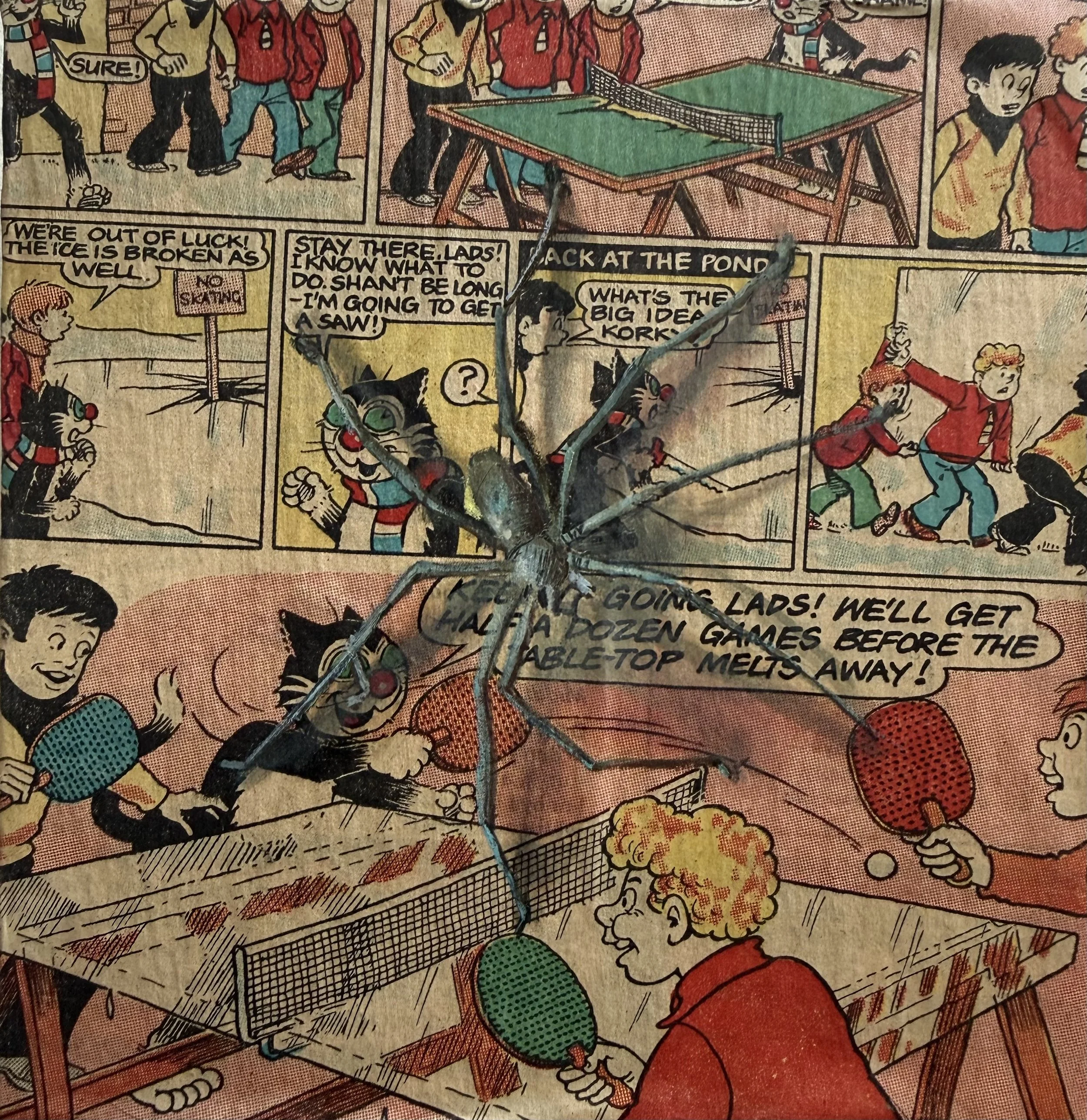
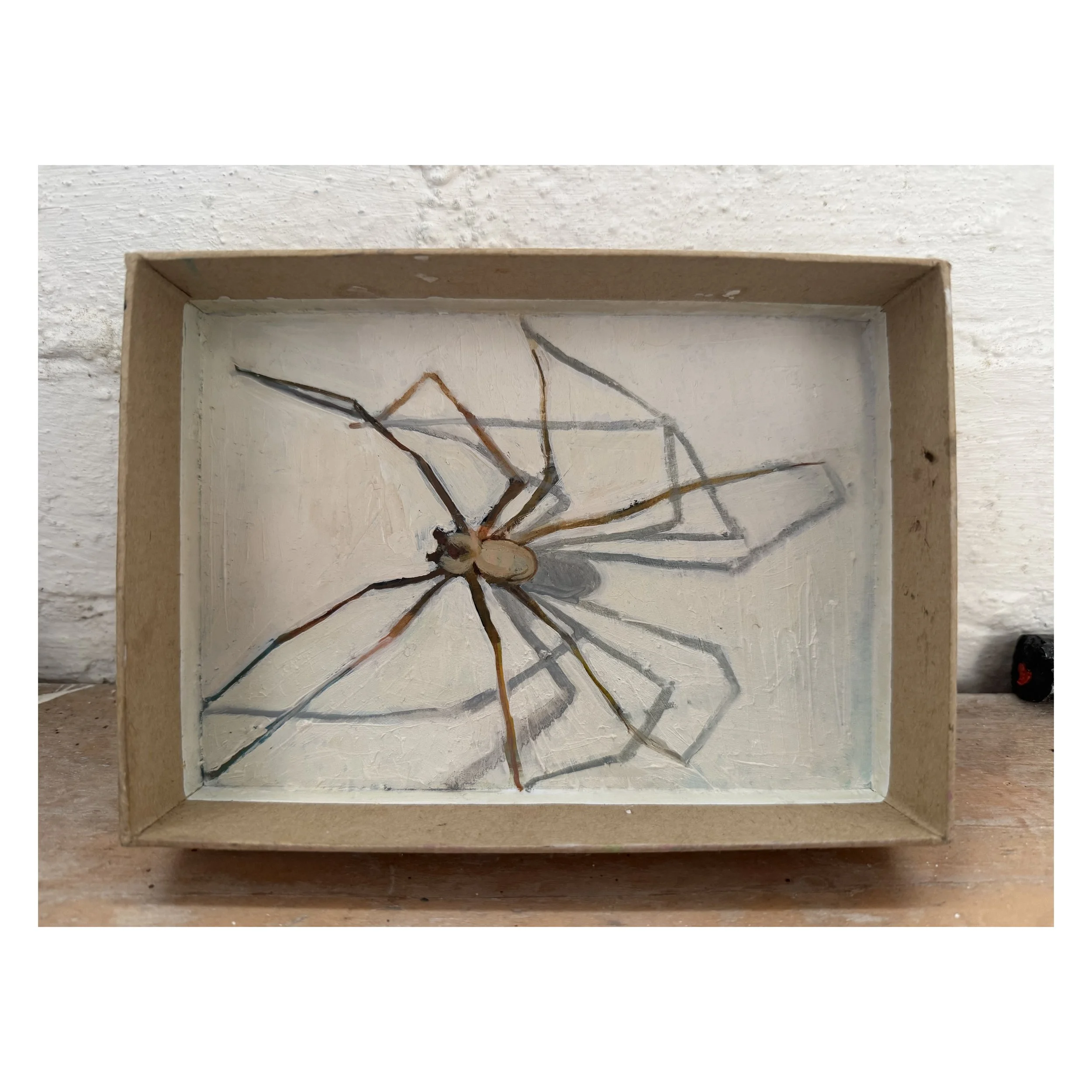
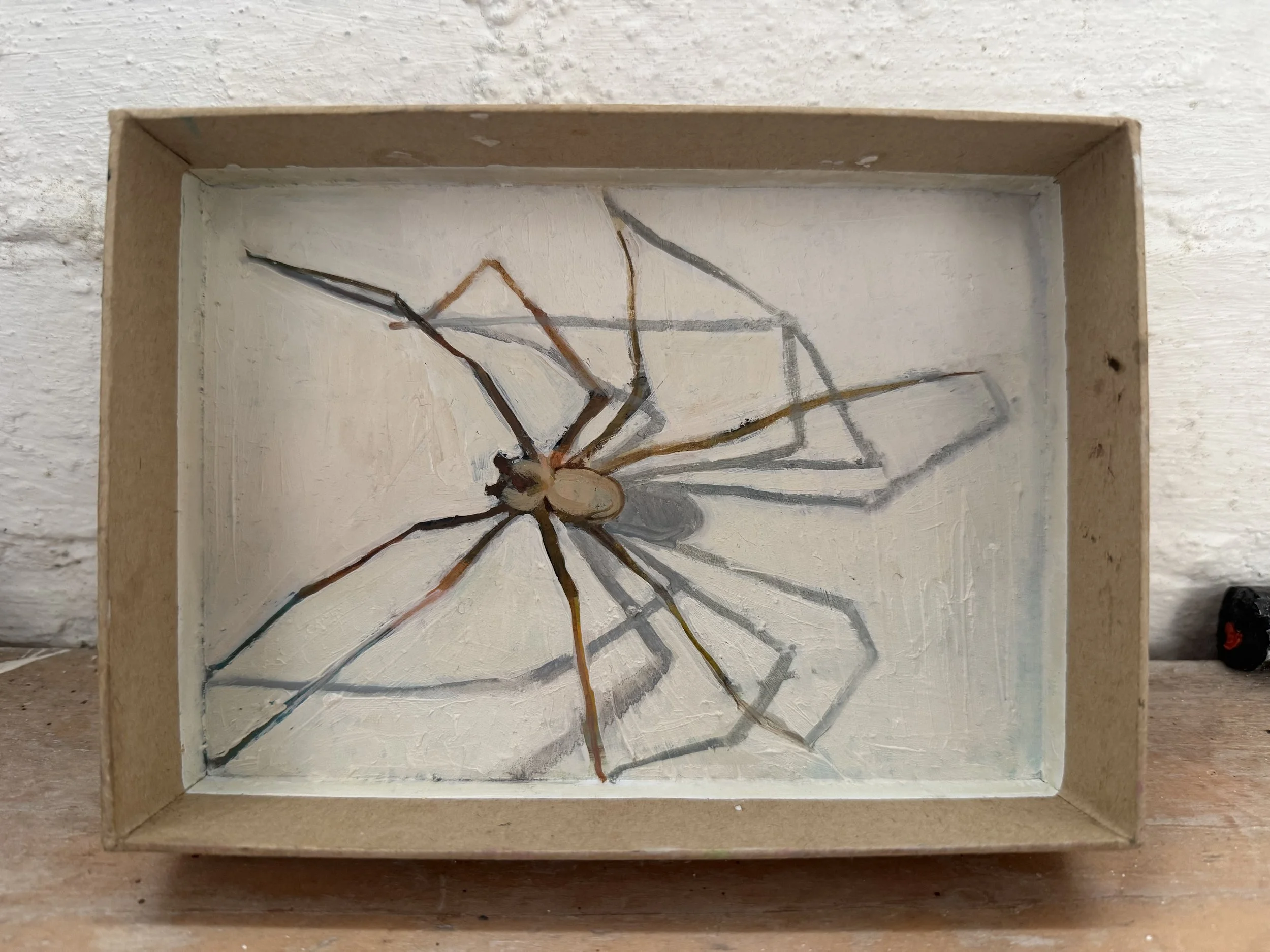
For many years my painting has been closely connected to my home-life; precious hours for painting squeezed between childcare, cooking, washing, school-runs: thus sleeping children, spiders, pets, have all featured in previous works.
“We have to designate the space of our immobility by making it the space of our being.”
While juggling my creative work with the demands of motherhood, I came across this line in Gaston Bachelard’s seminal book “The Poetics of Space”; it spoke directly to my lived experience and seemed to affirm the choices I was making in my subject matter; this exhibition’s title has also emerged from elsewhere in the book.
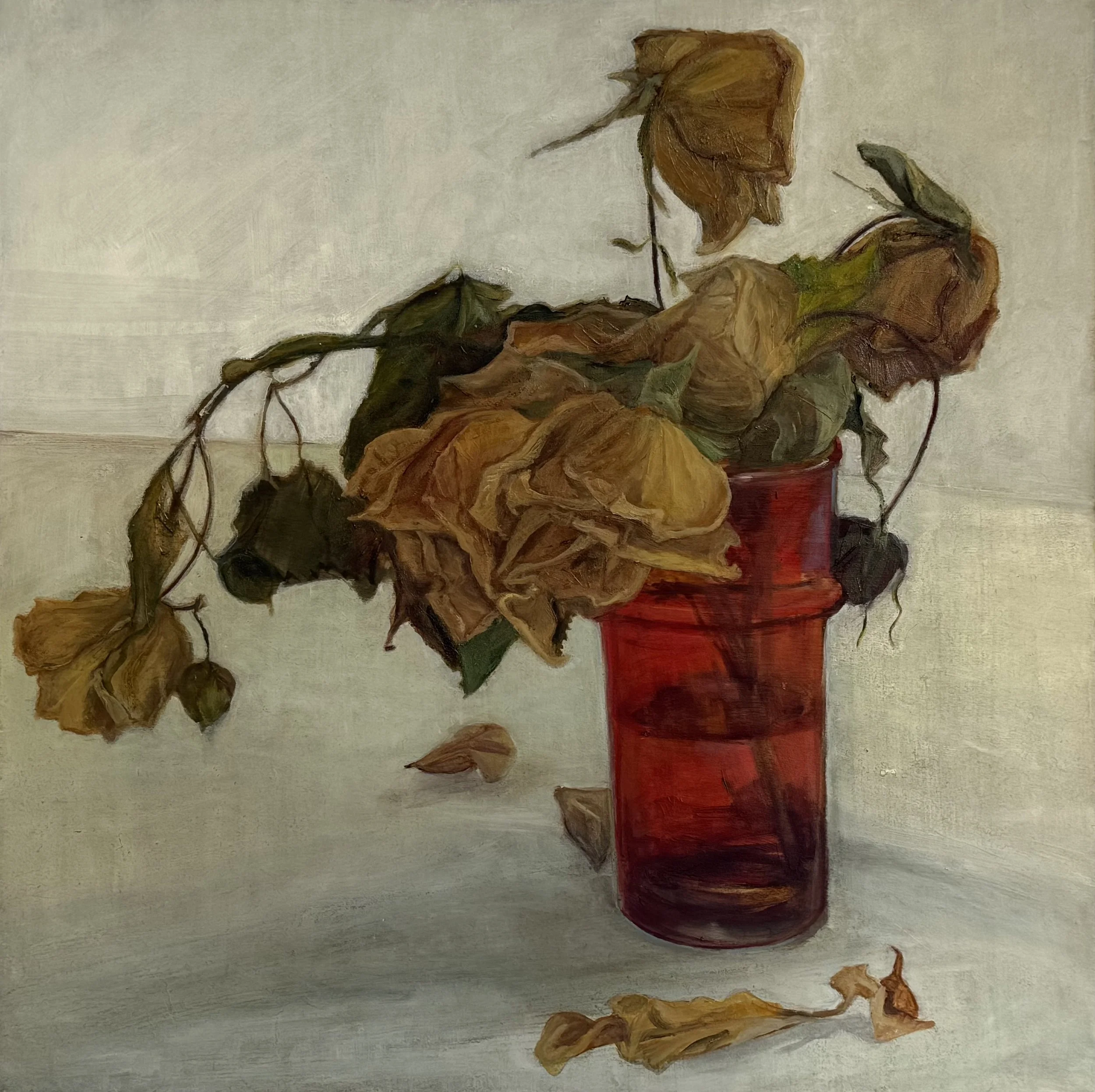
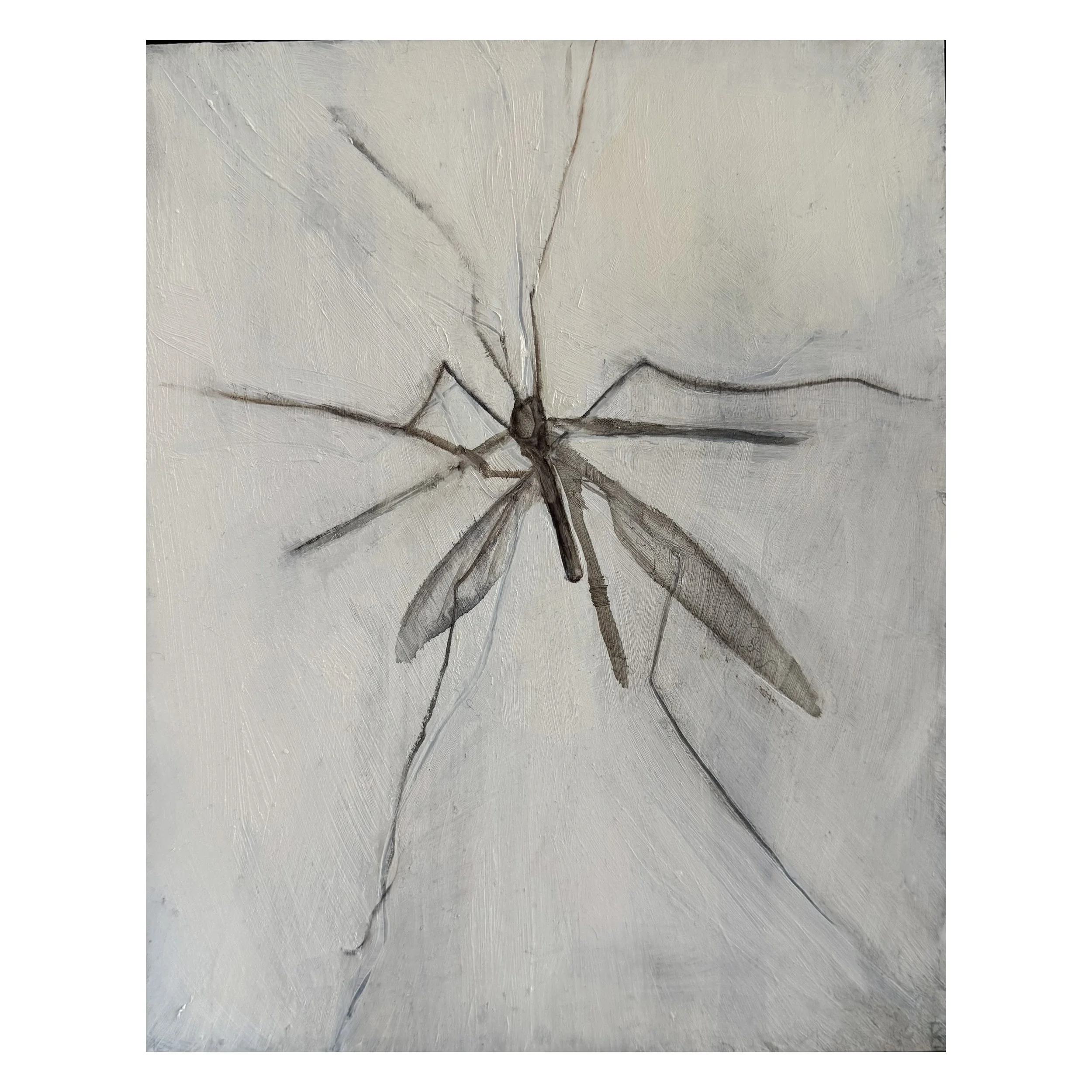
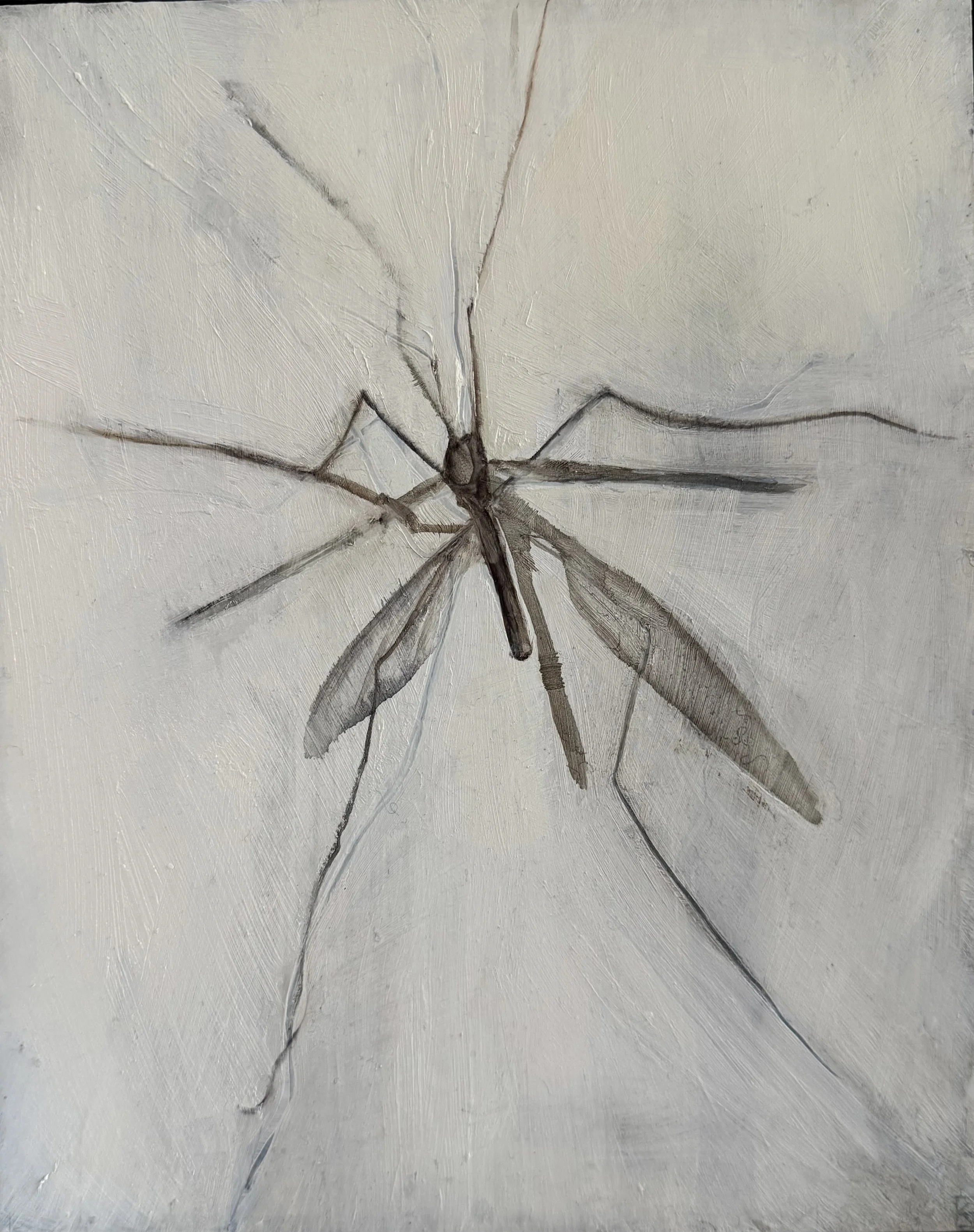
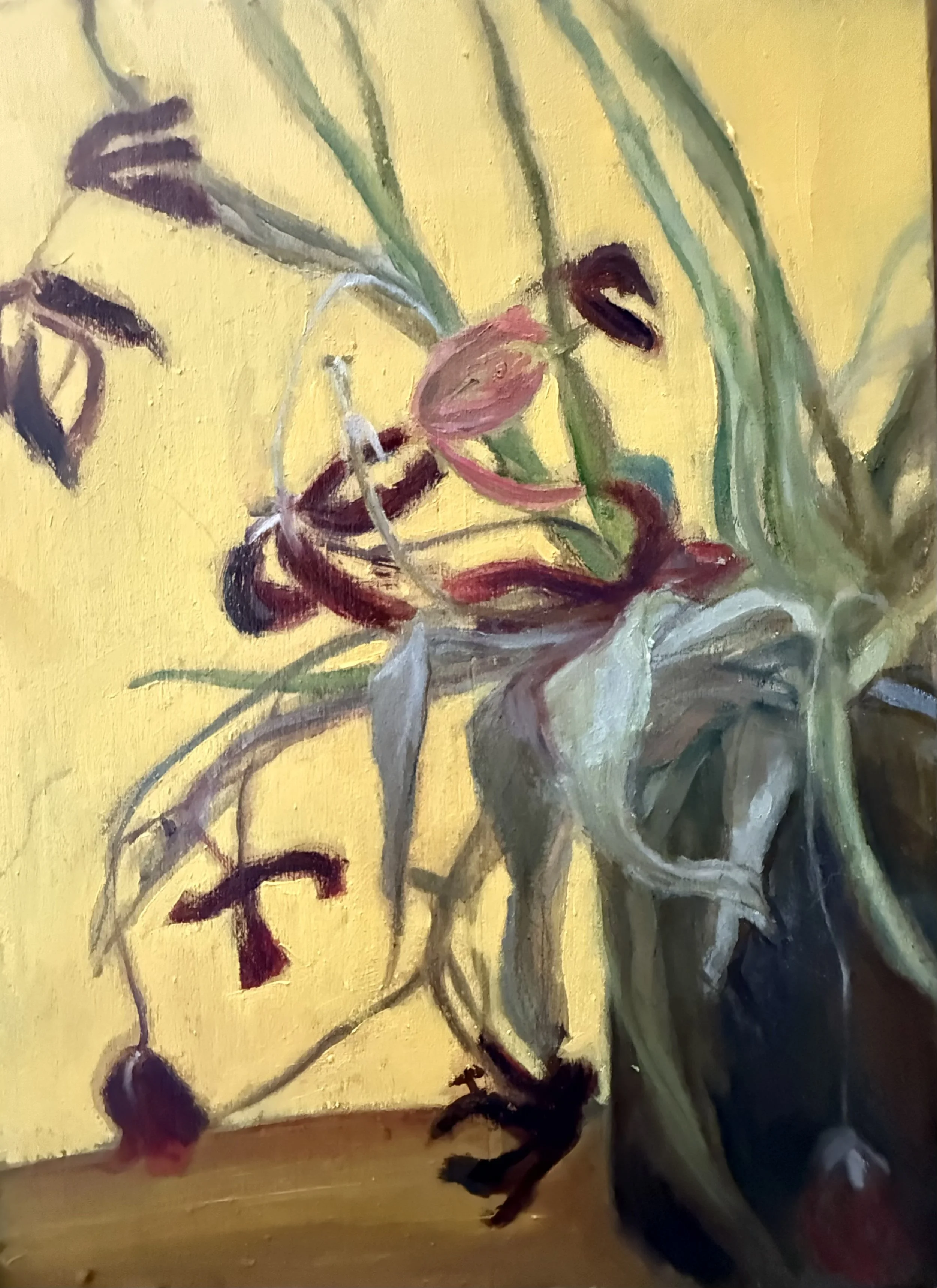
This show expands upon the life, and lives, still and otherwise, around me in my home. Unexpected significances and meanings emerge from flowers wilting in vases and spiders hiding in corners; as animated by my thoughts - by the ideas of Bachelard and others, and my experience of living in this world as an artist; as a woman; as a mother.
As a genre still life has often been coded as female due to its links to the the kitchen and dining room; private spaces of the home - often seen as the domain of women and their work. Within the home, everyday objects around us accumulate meaning. So it was with these bunches of flowers that I had, for various reasons, been given - expressions of conventional beauty, of care, of love, of loss,
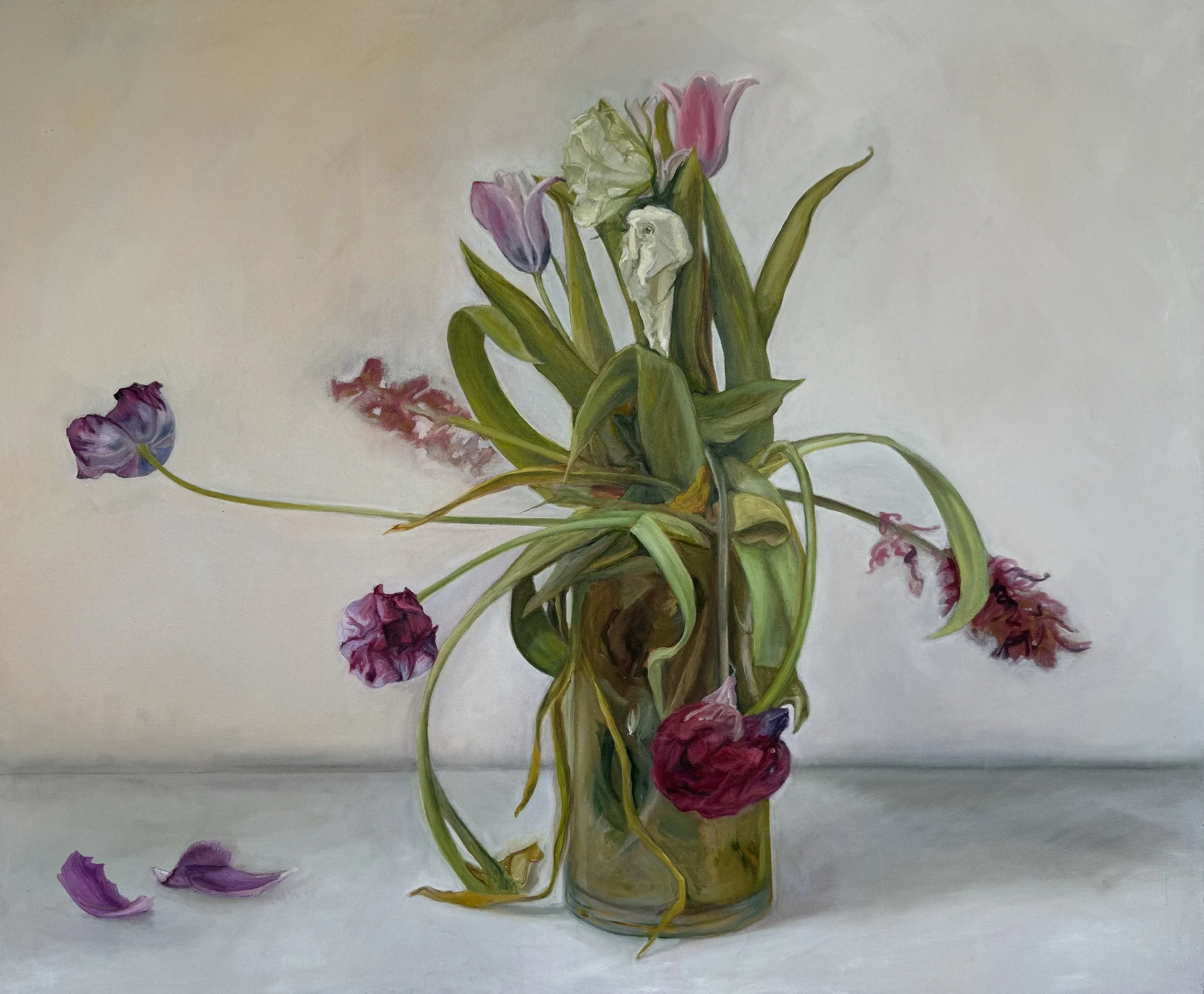
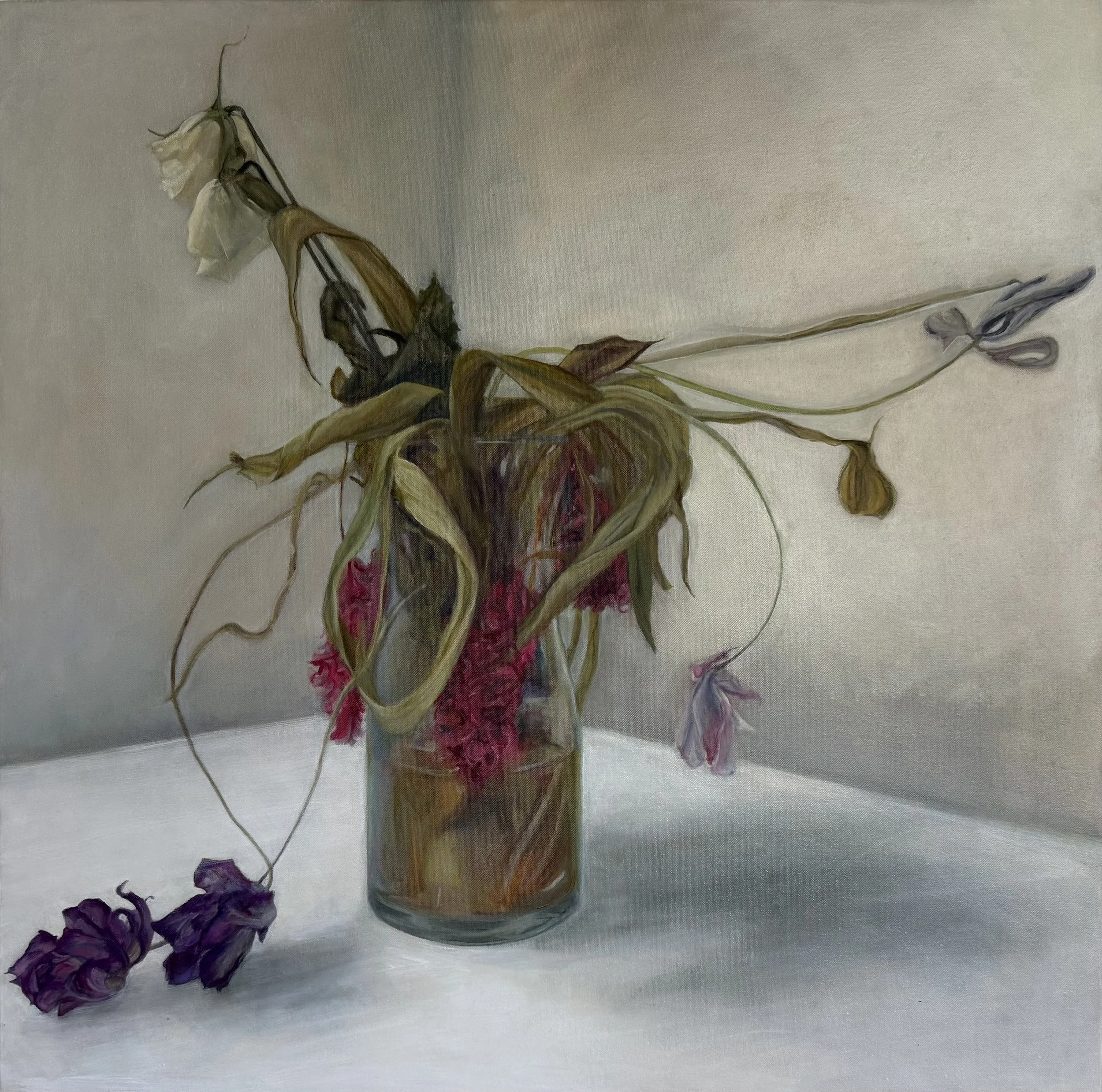
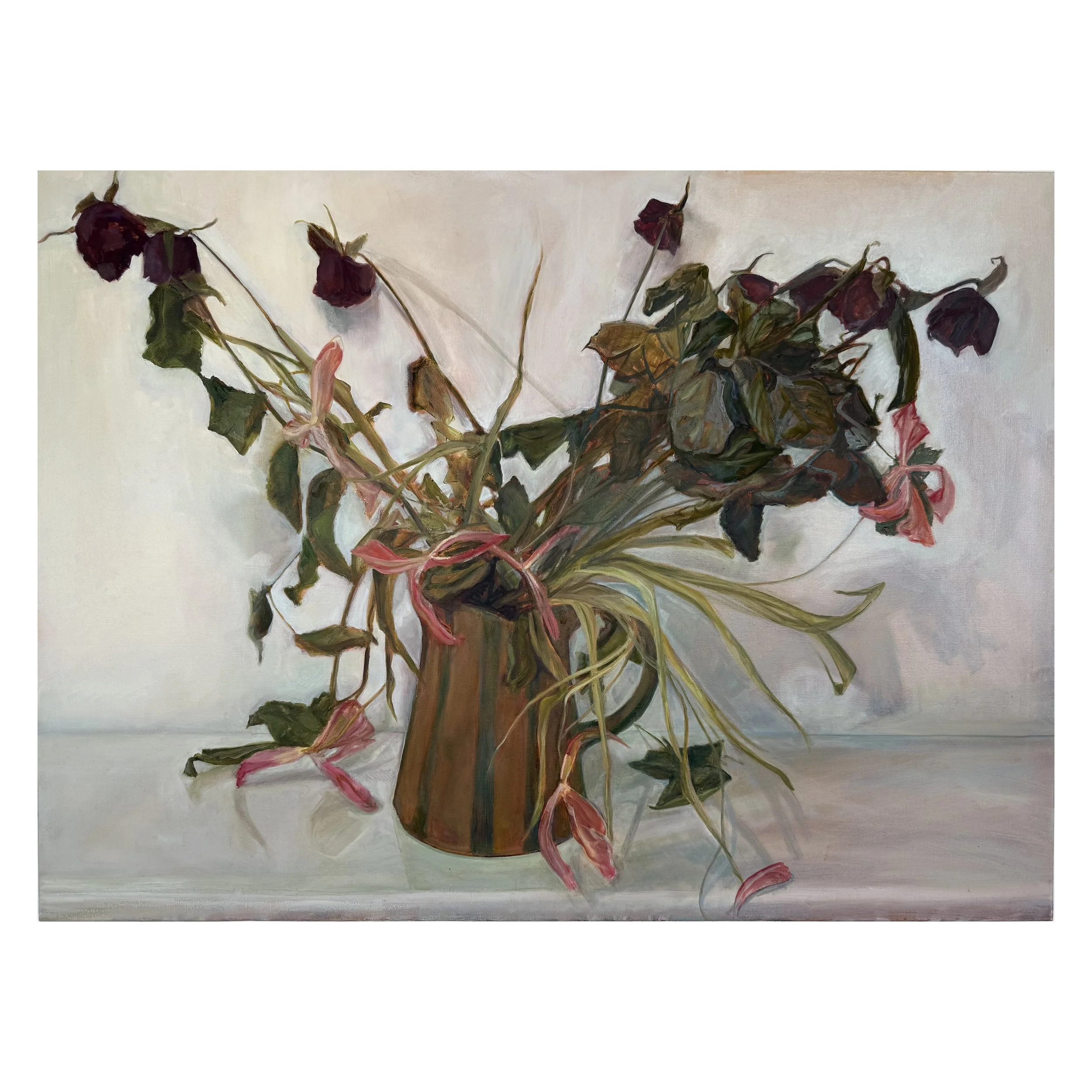
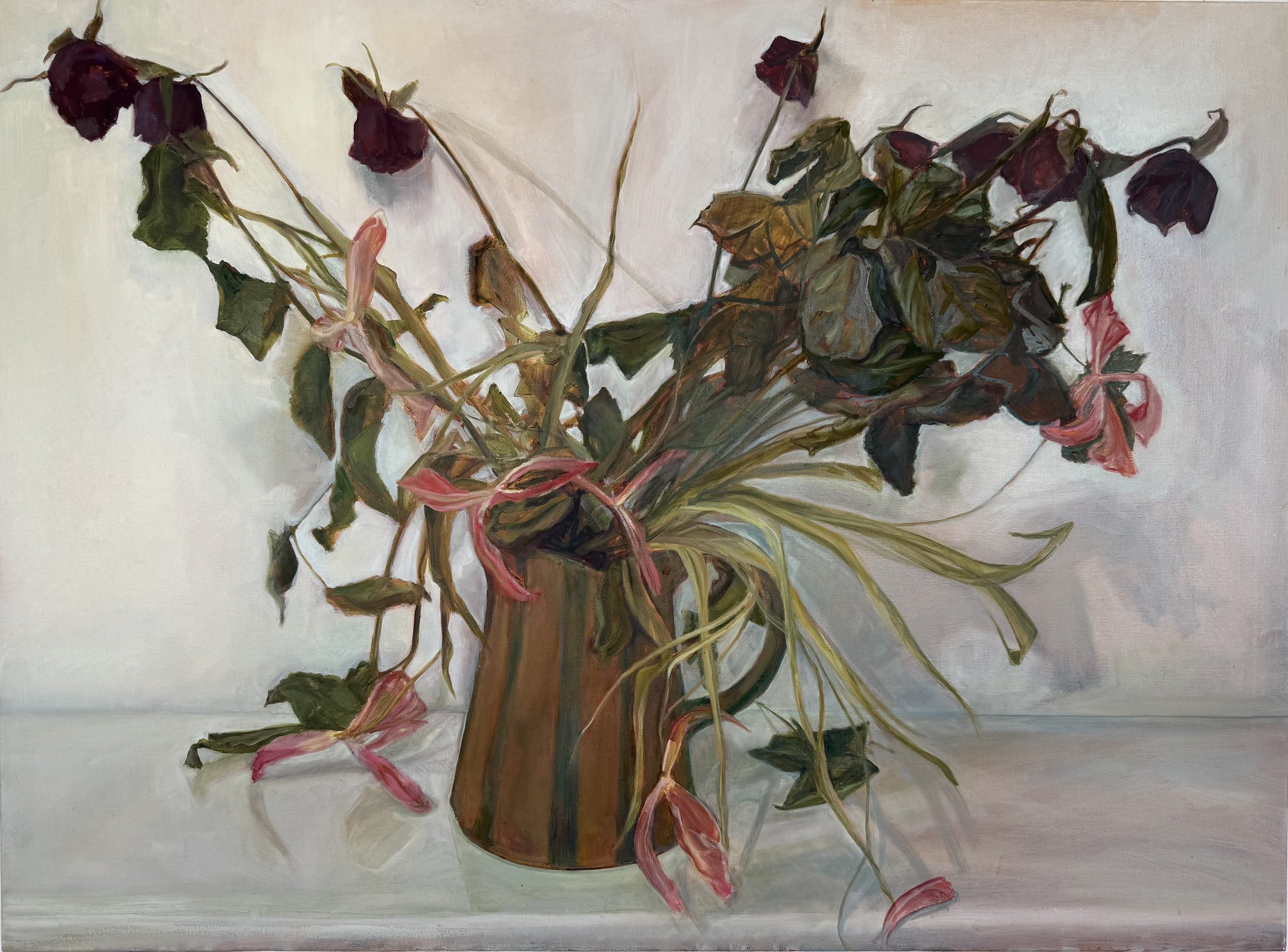
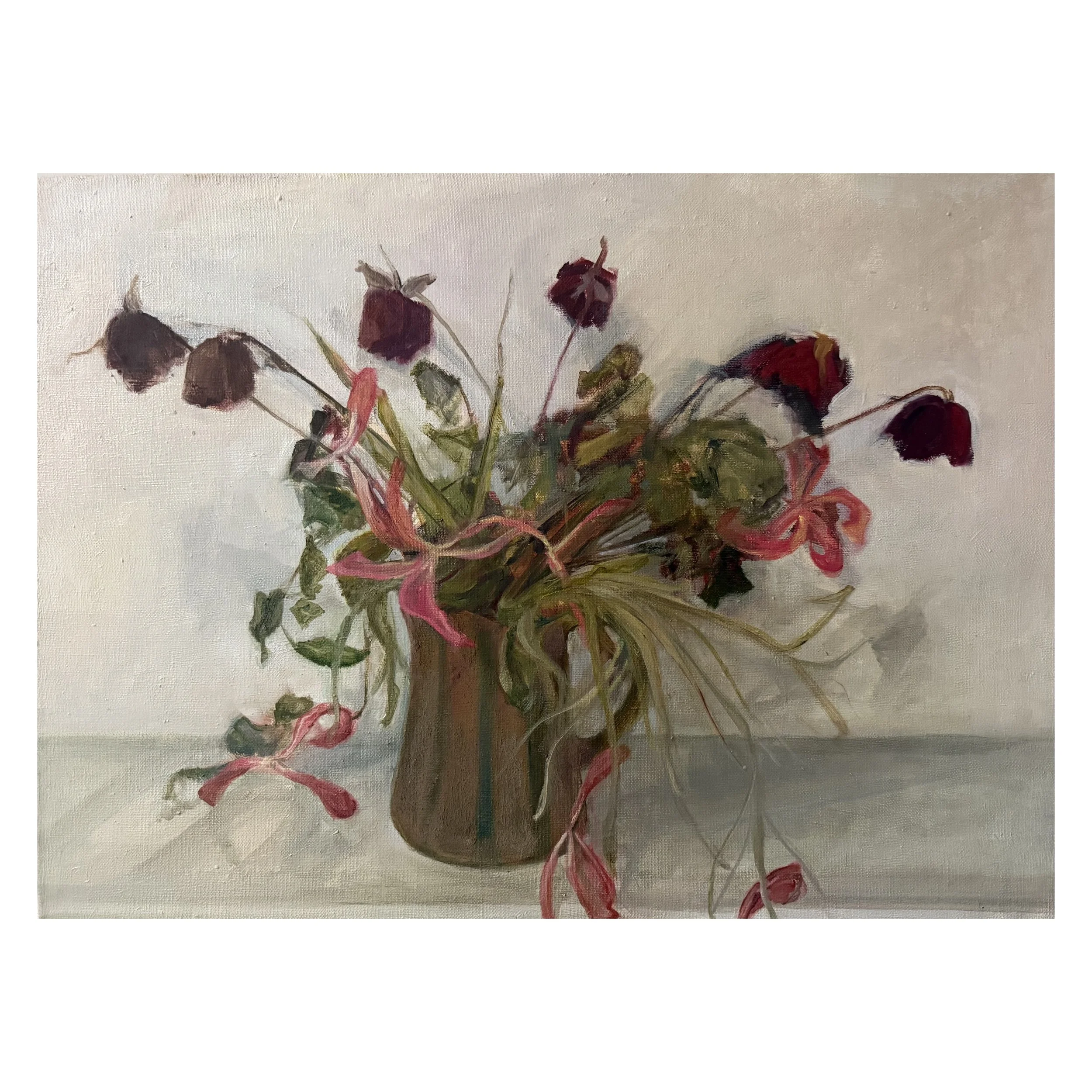
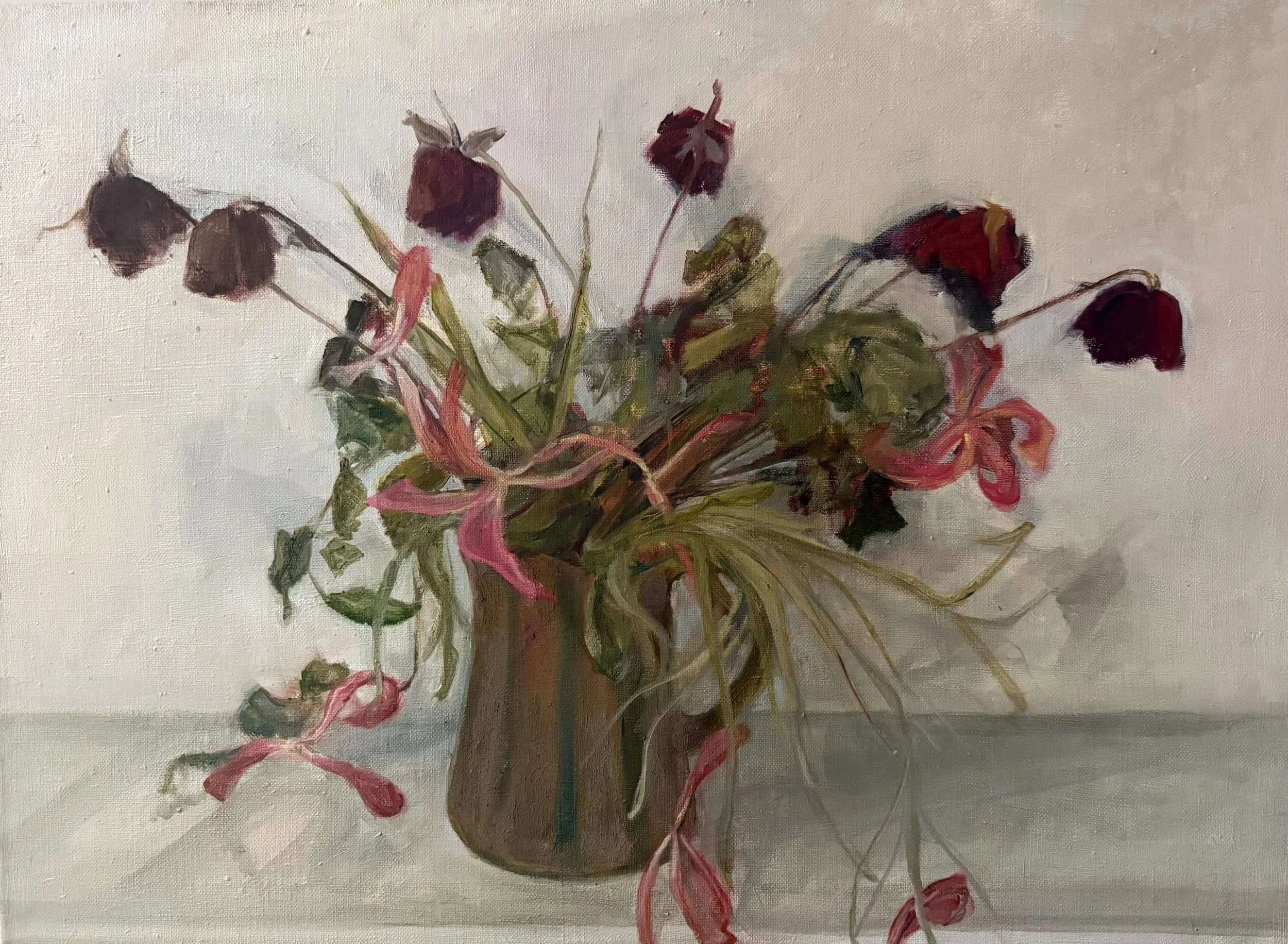
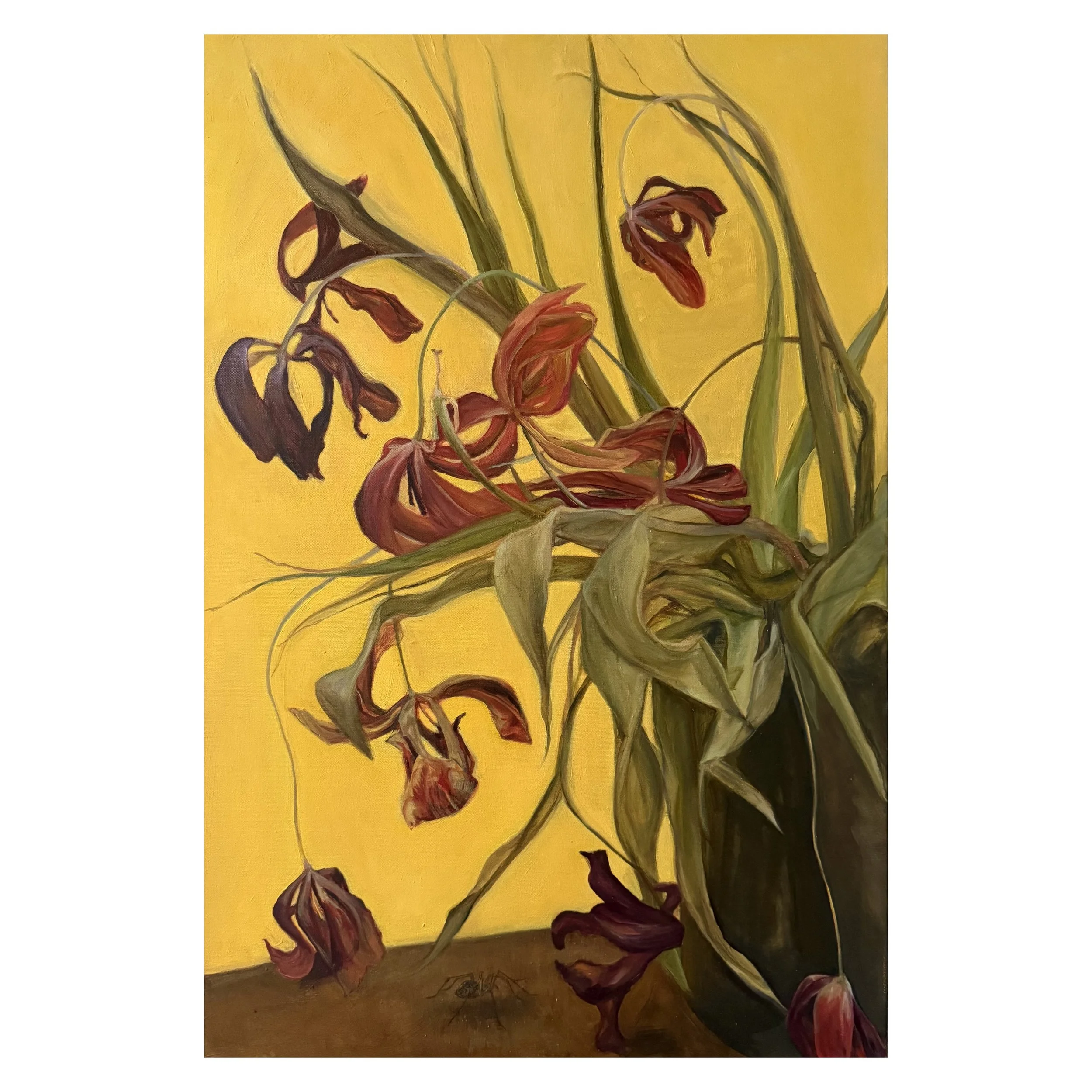
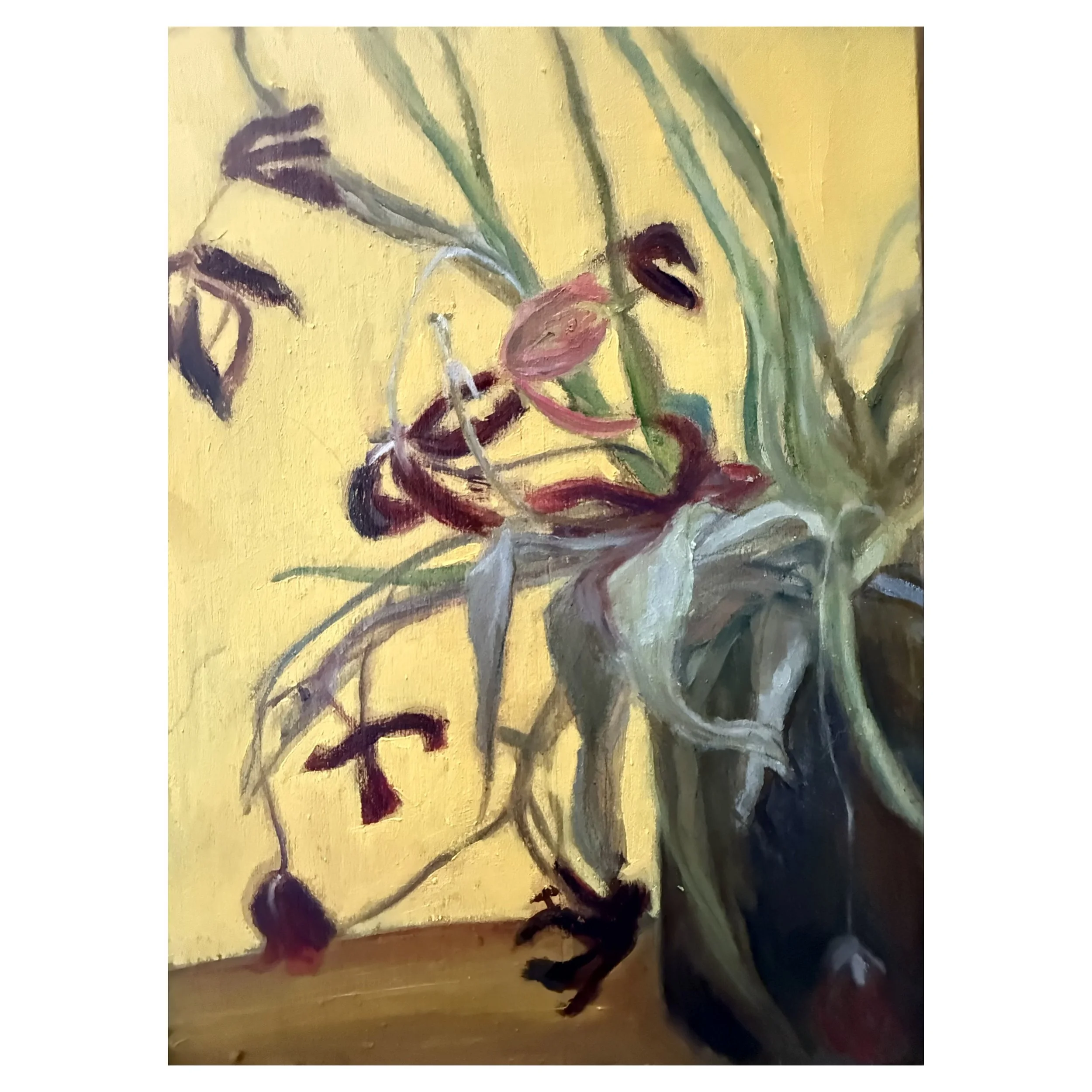
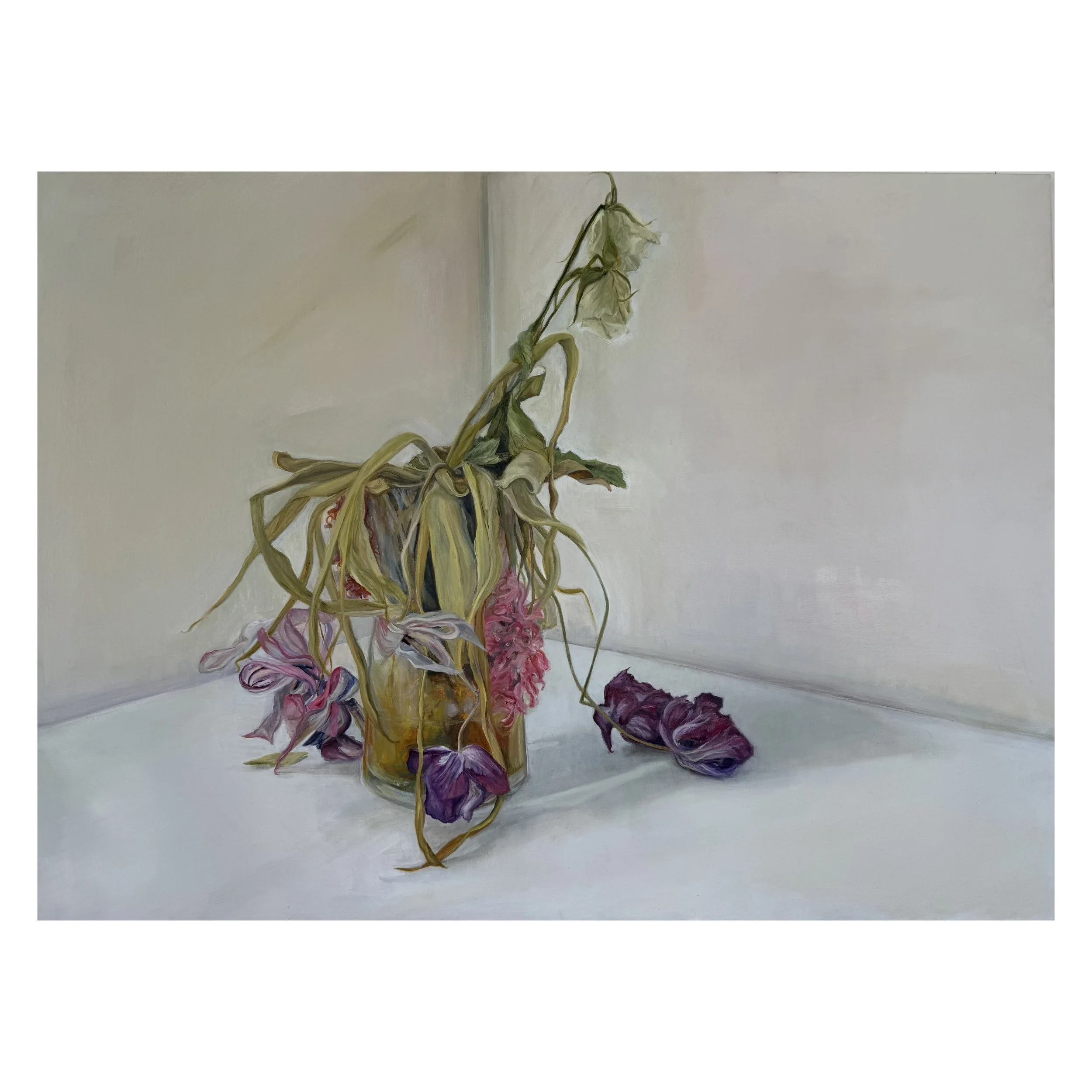
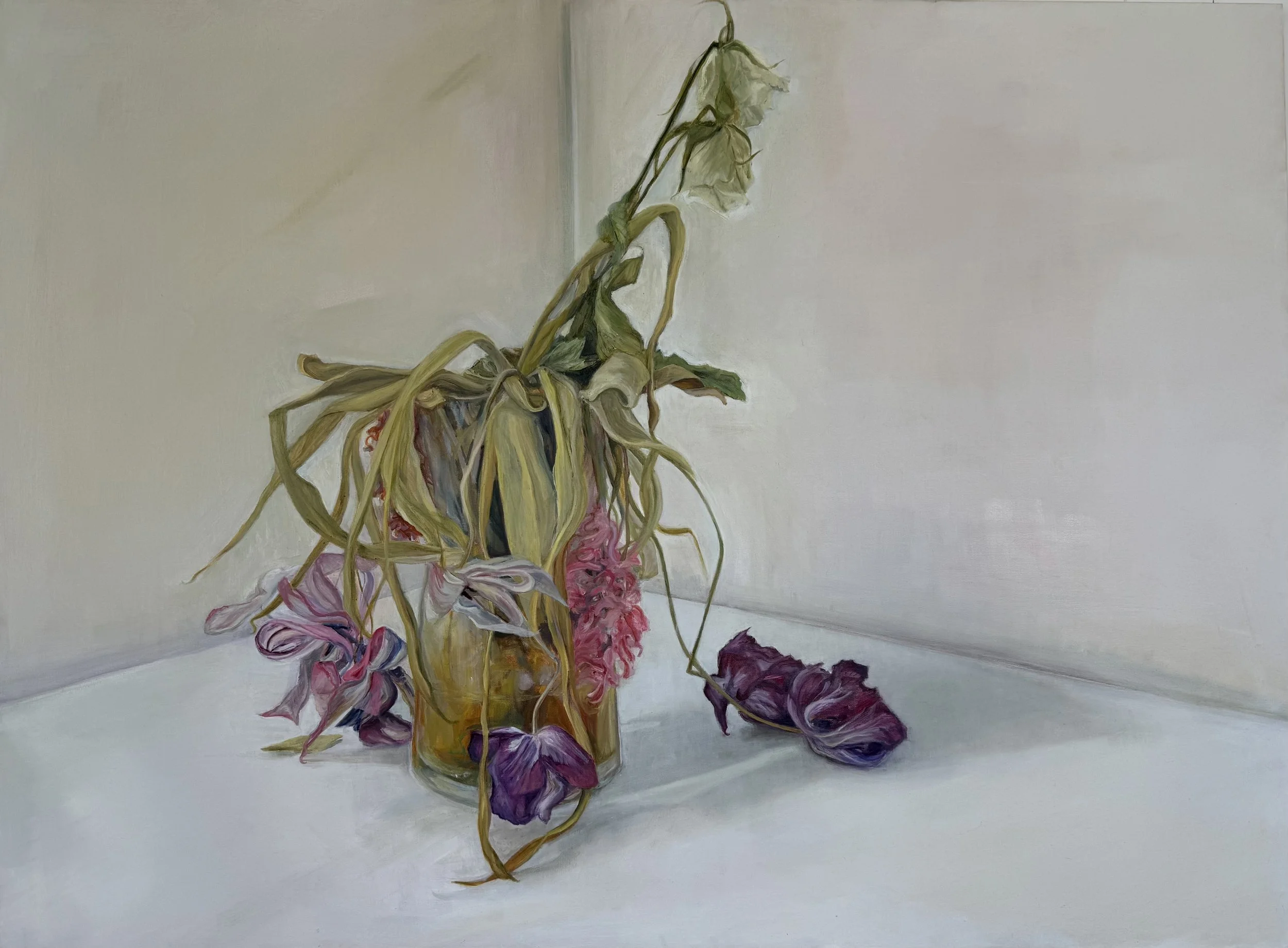
`One main focus of this show are the flower paintings which have, in part, been inspired by Susan Sontag’s essay “The Double Standard of Aging”; in this text from the distant days of 1972 Sontag wrote, “Women should allow their faces to show the lives they have lived.”
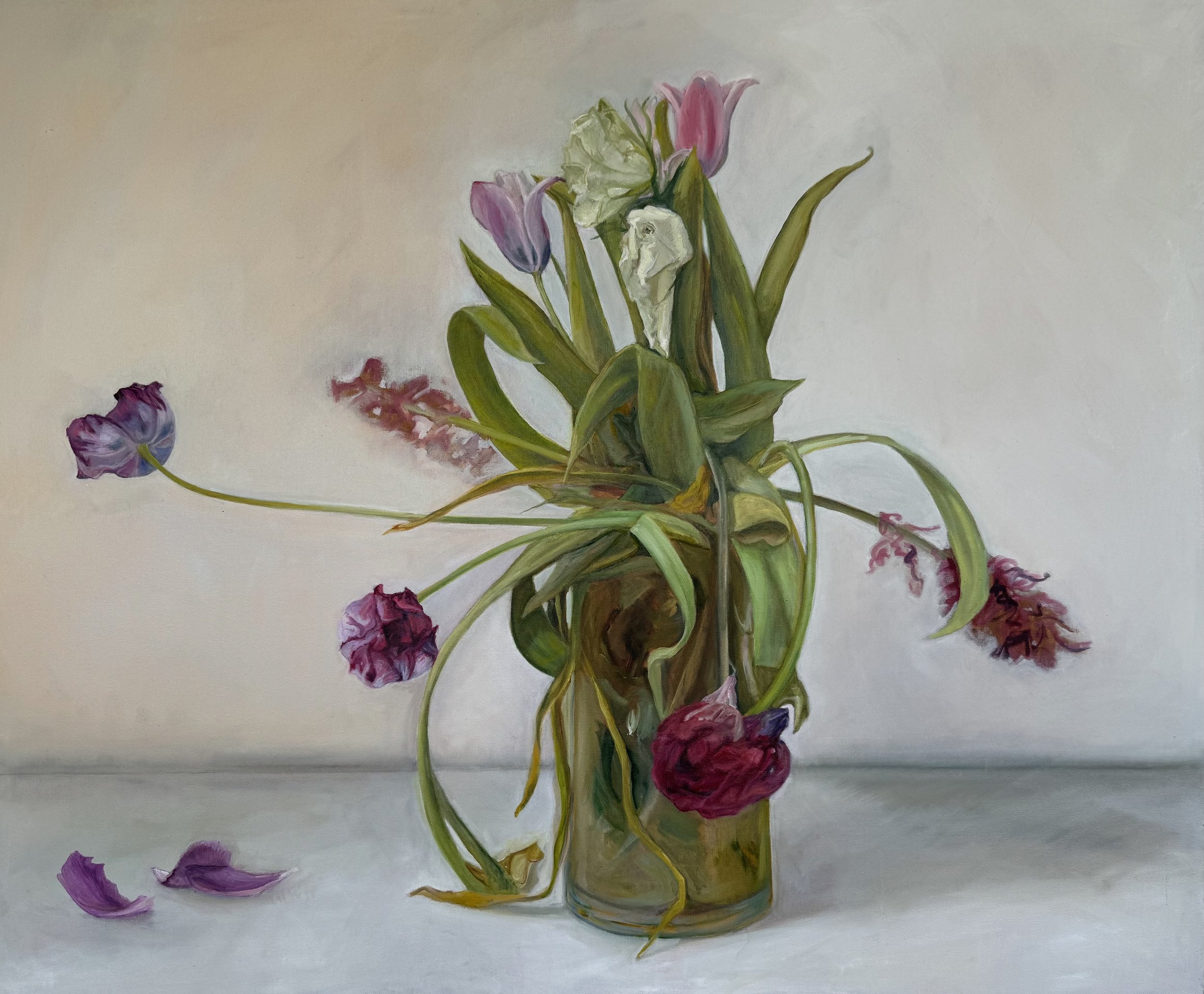
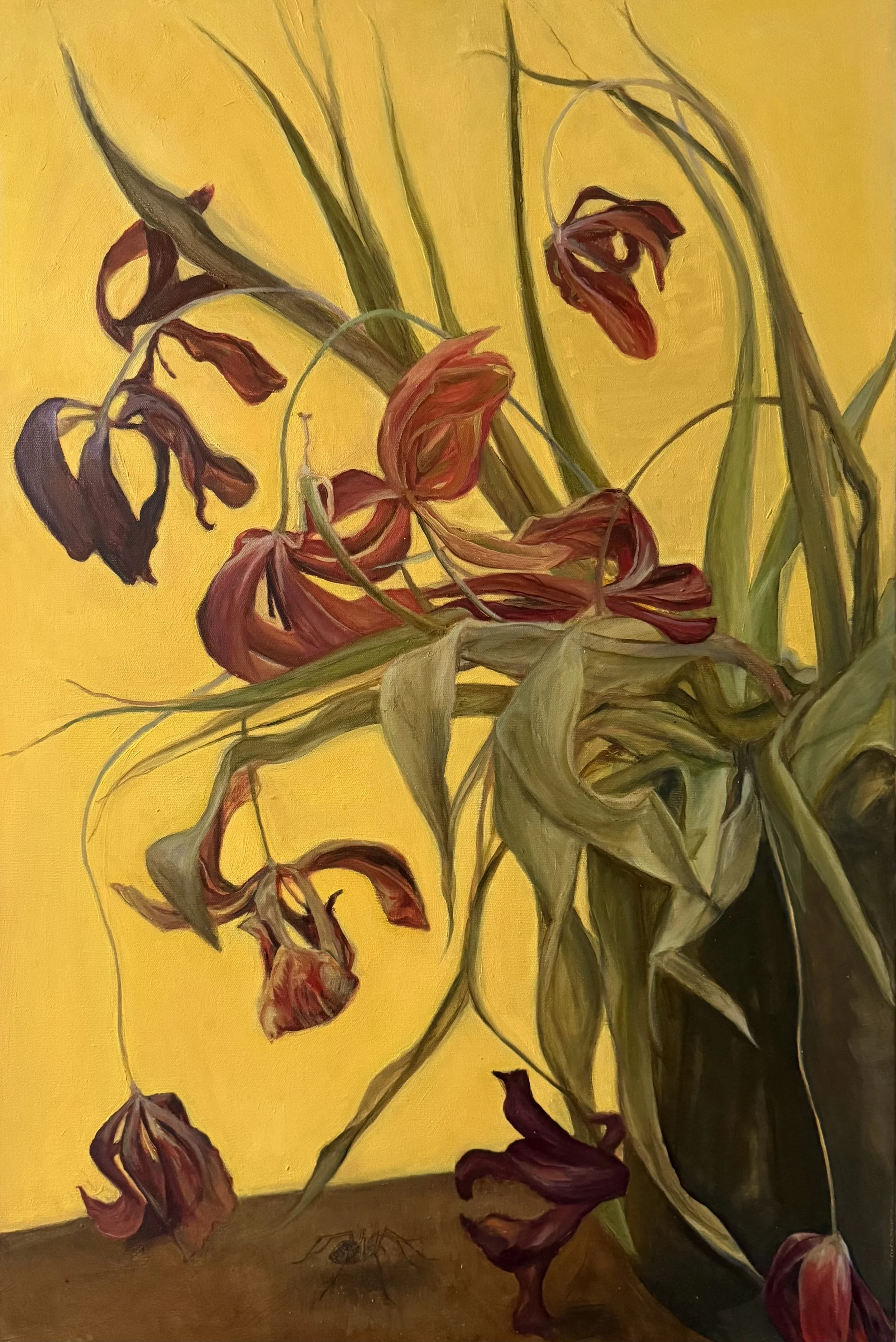
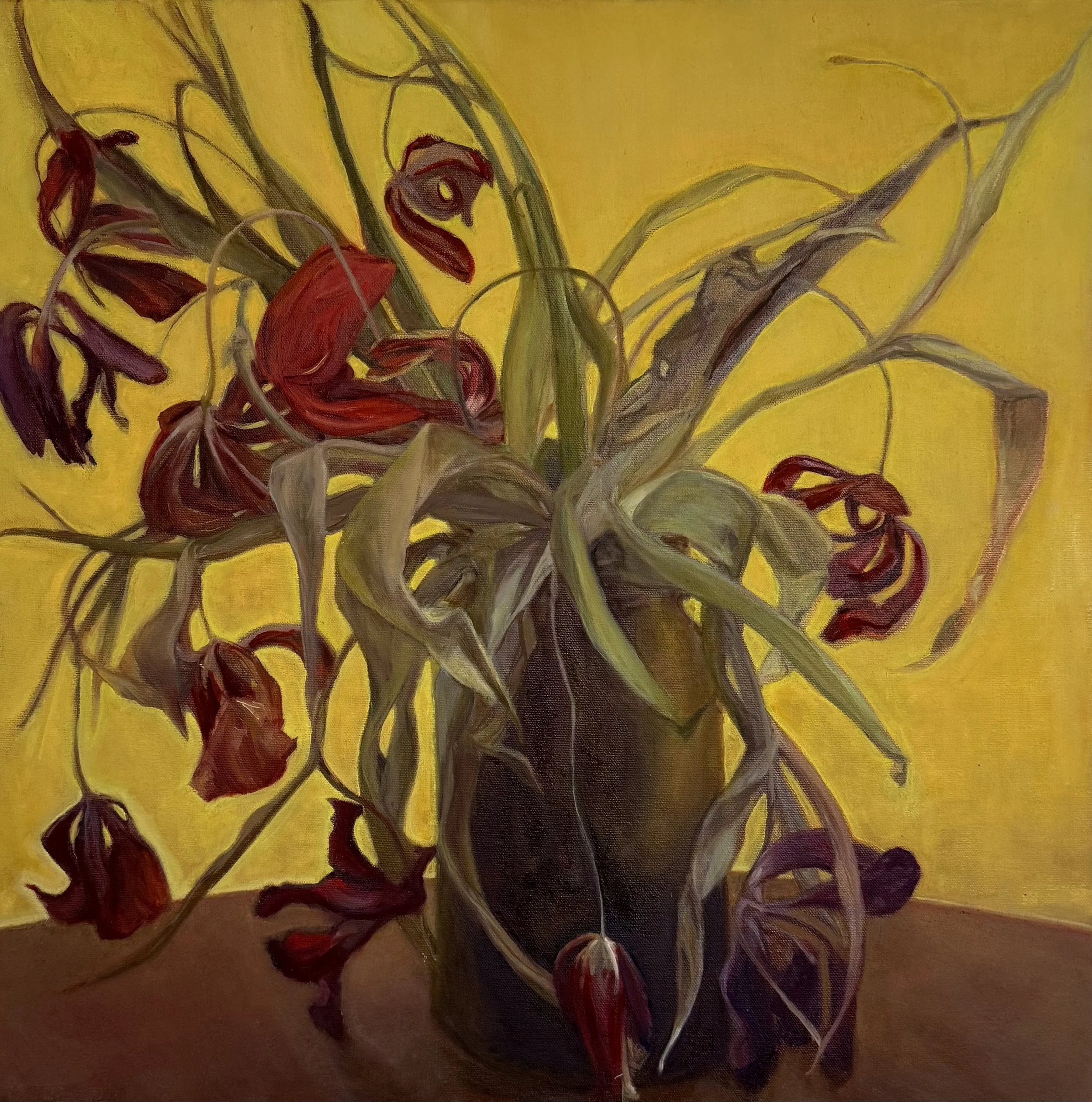
At first tulips stand upright and taut in their vase; then they open and bloom, stretching outwards, stamens sticky and full of pollen; next, having given their all, they begin to sag and droop, dropping petals; finally as they dry out, they twist and contort - ending up withered before inevitably being discarded - skeletal, ugly, useless, obsolete.
However, it was in these distorted forms that I found an affecting and ambiguous beauty - more intriguing, more interesting to my eye. I was drawn not only by the flowers’ shapes but also by the spaces in-between their stems, stamen and petals; the play of shapes and contrasts in deep sinews and folds - negative spaces of table top and sun-shadowed wall.
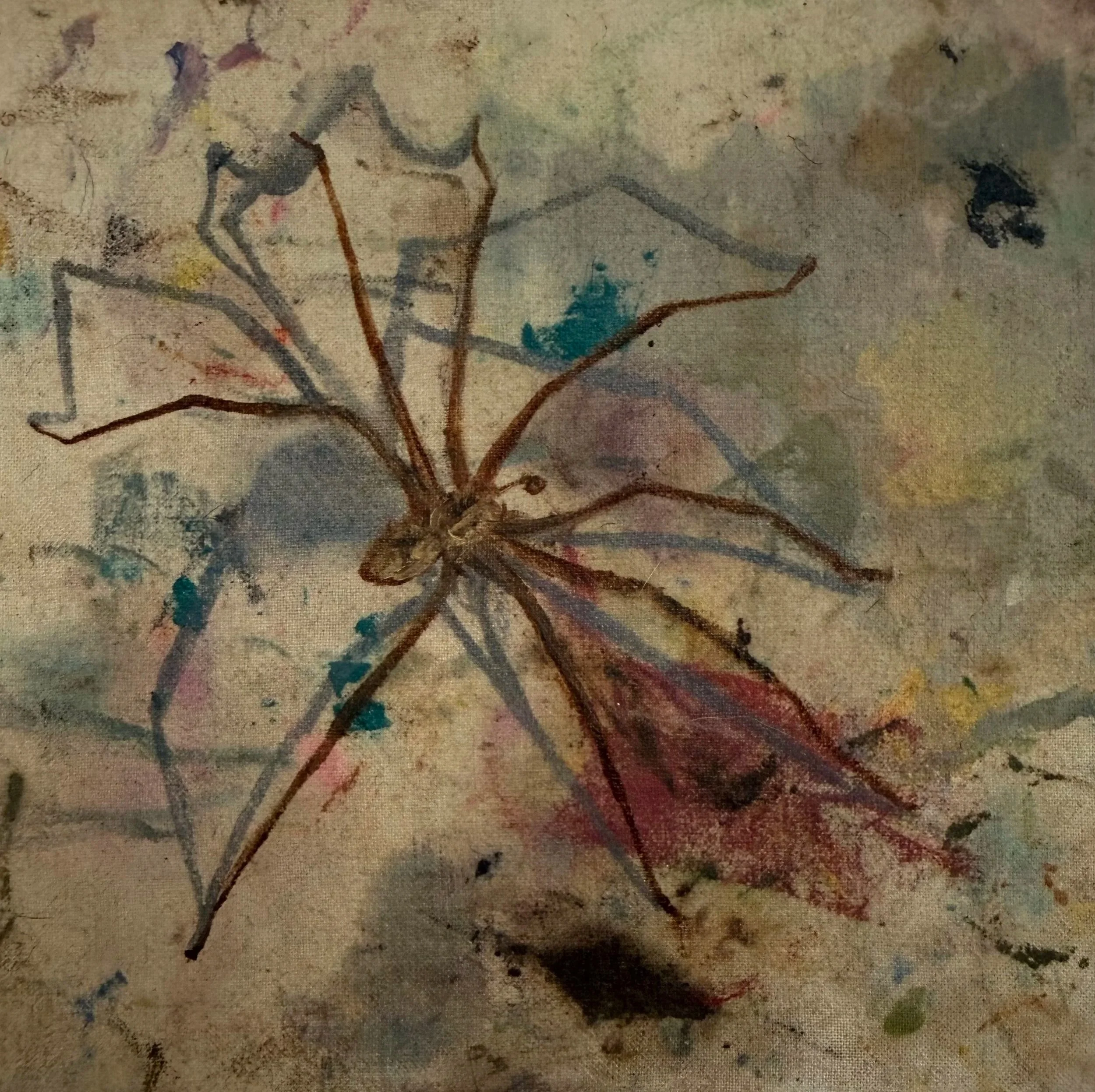
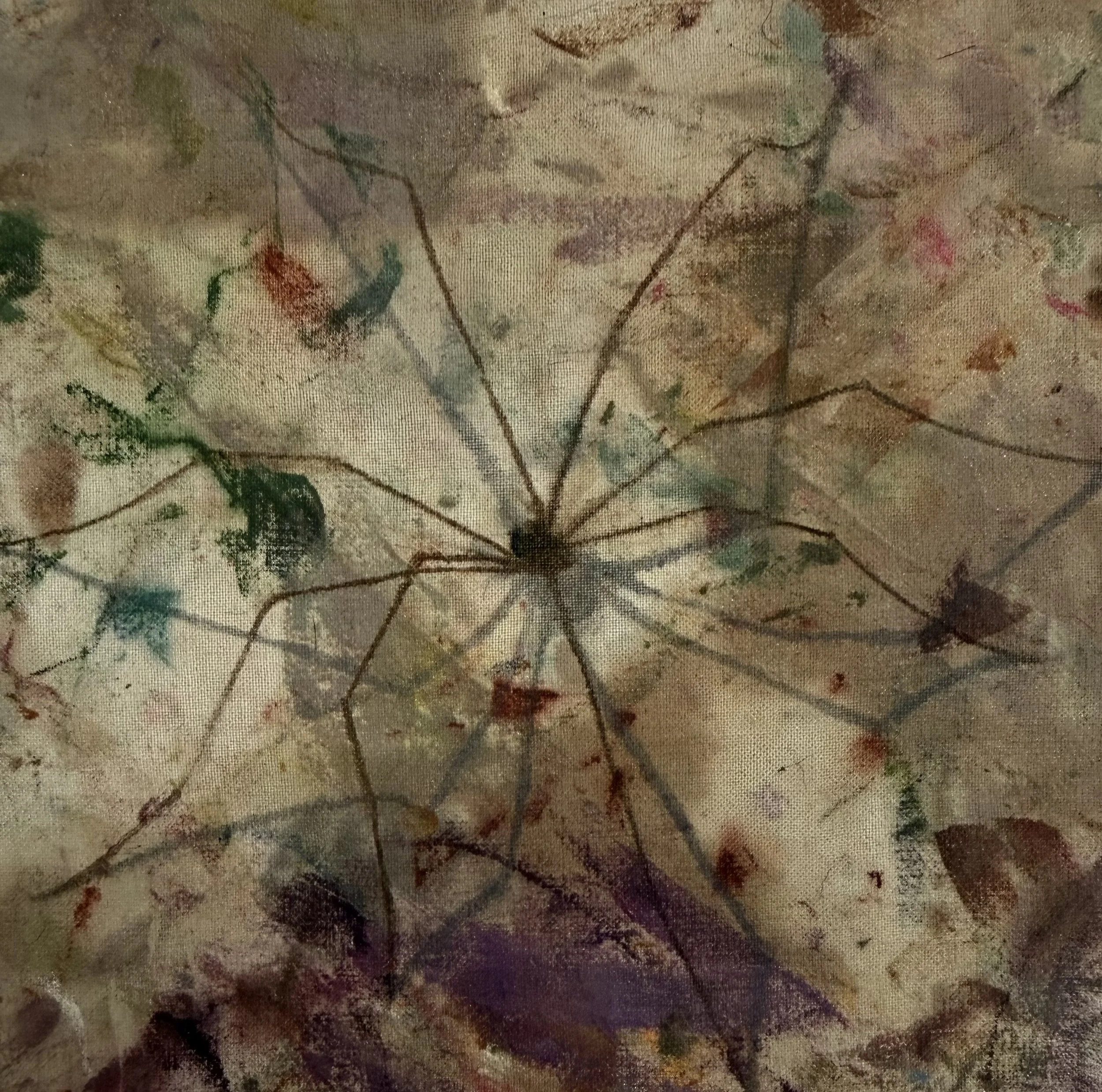
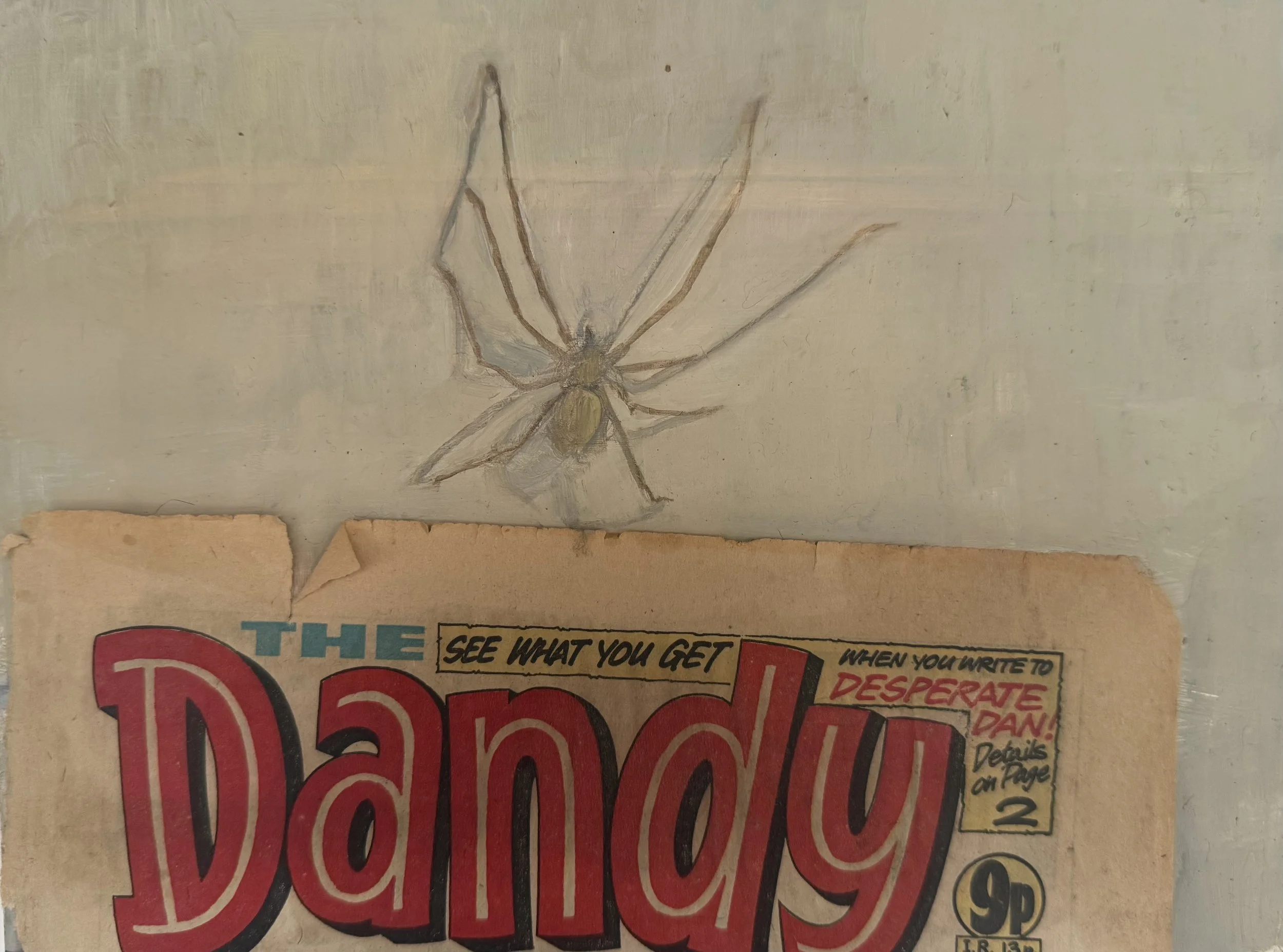
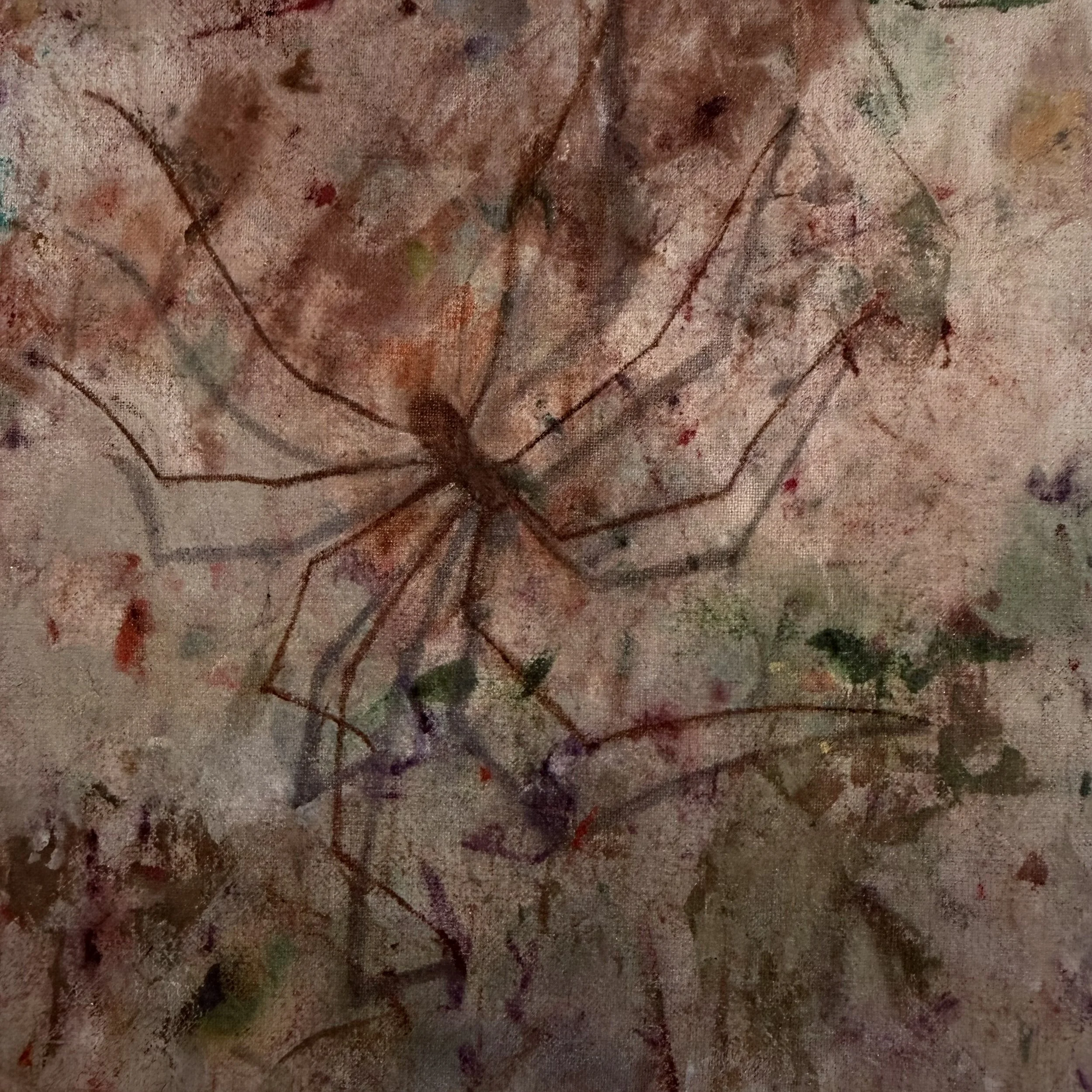
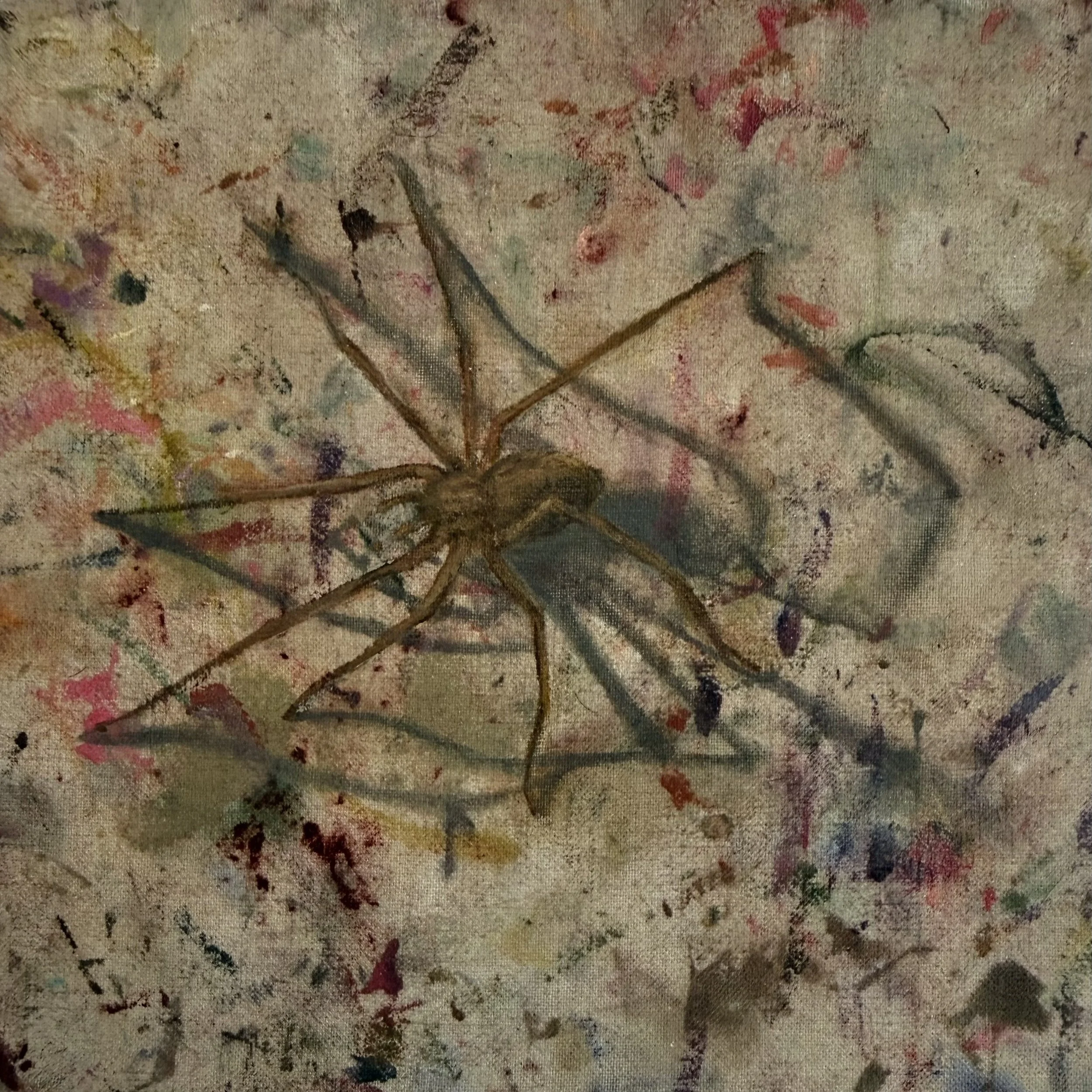
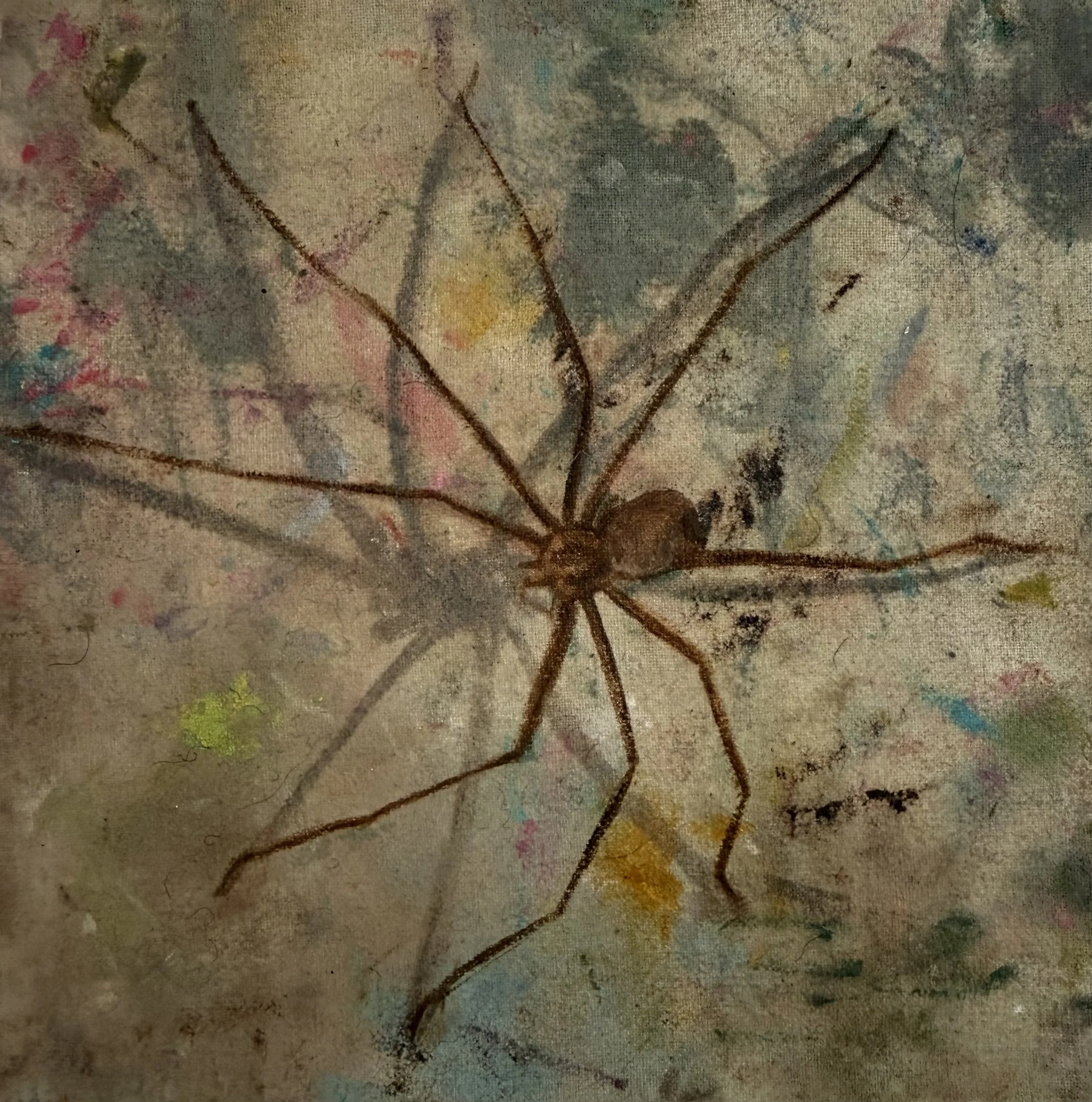
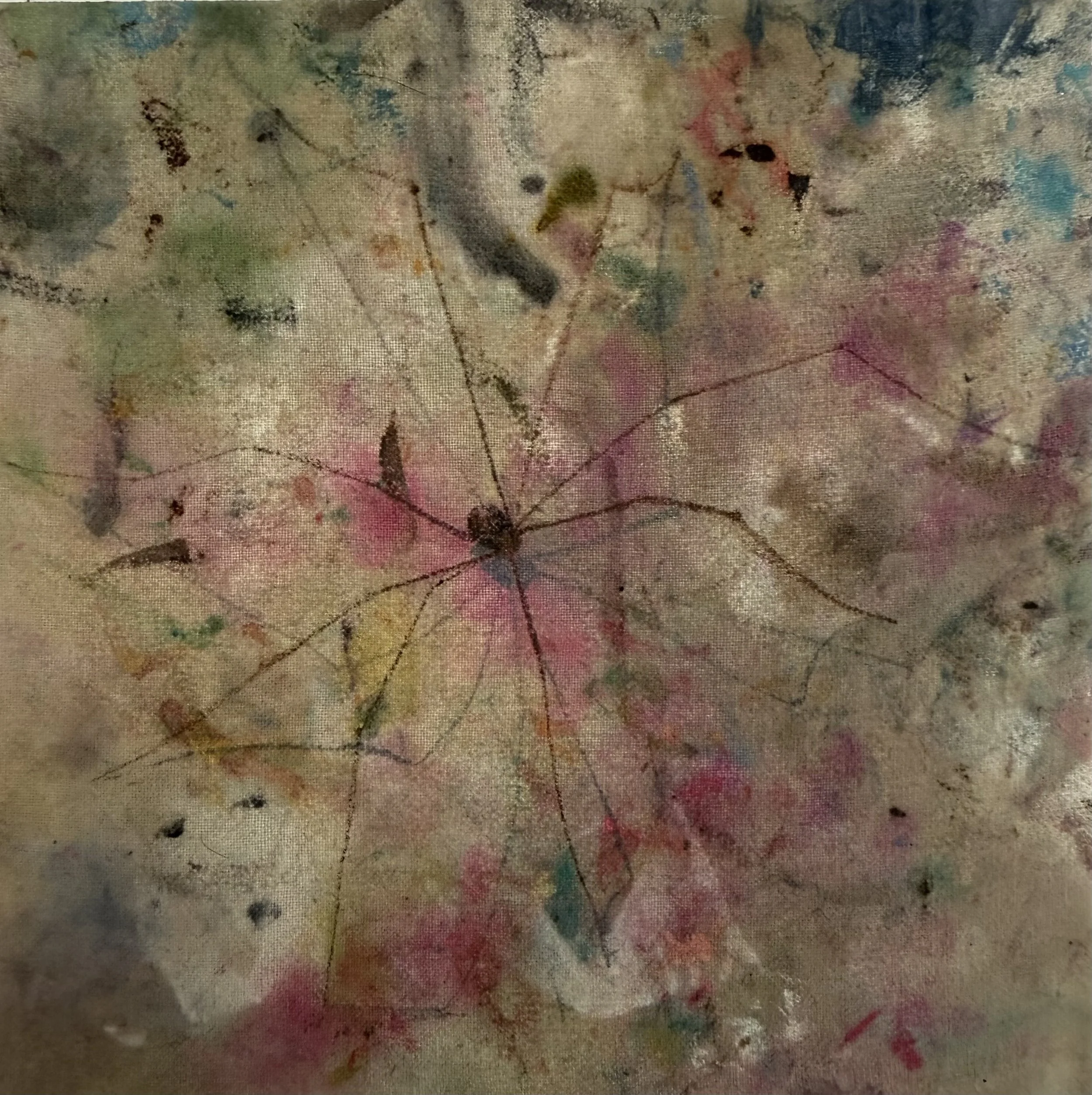
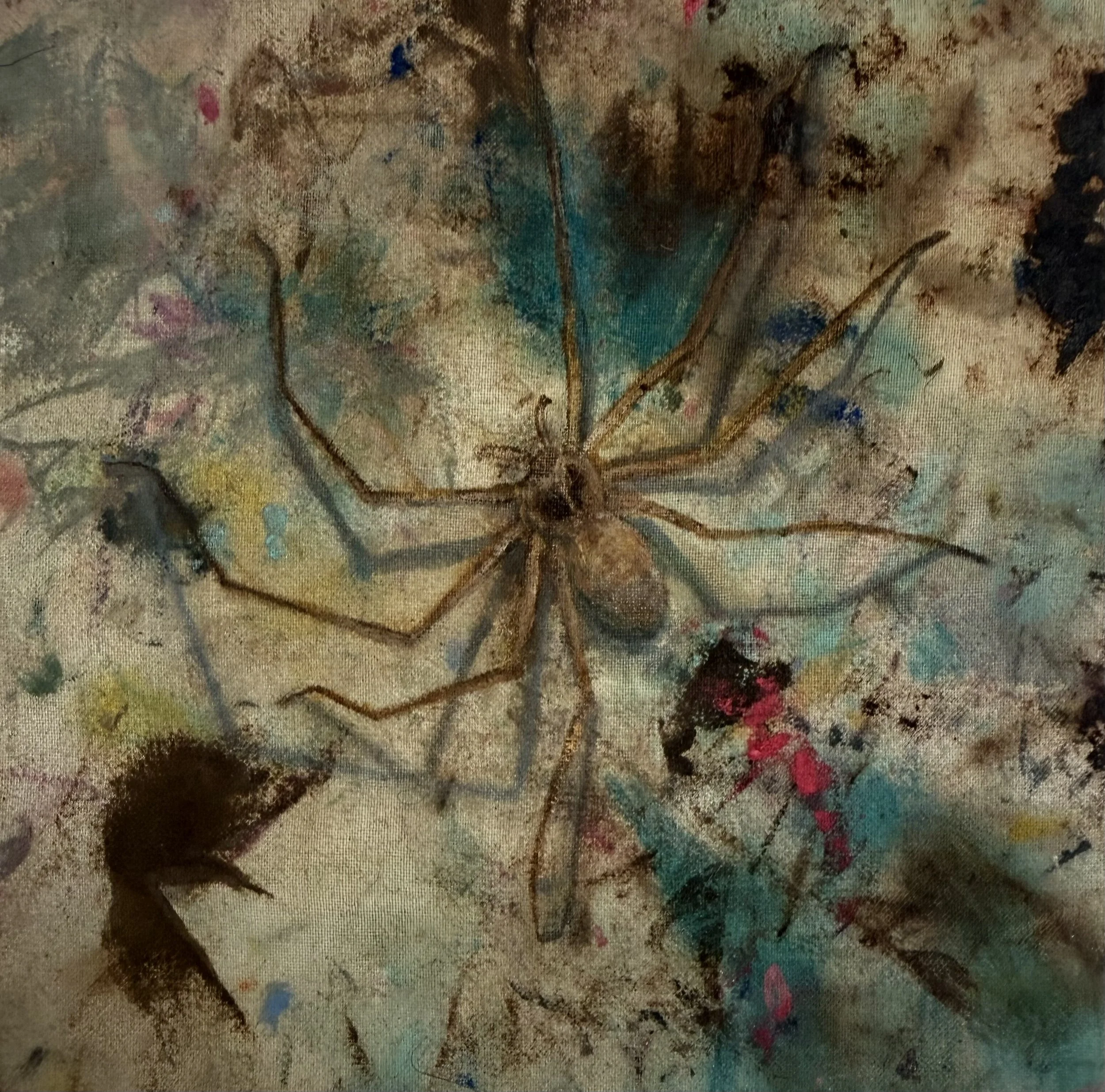
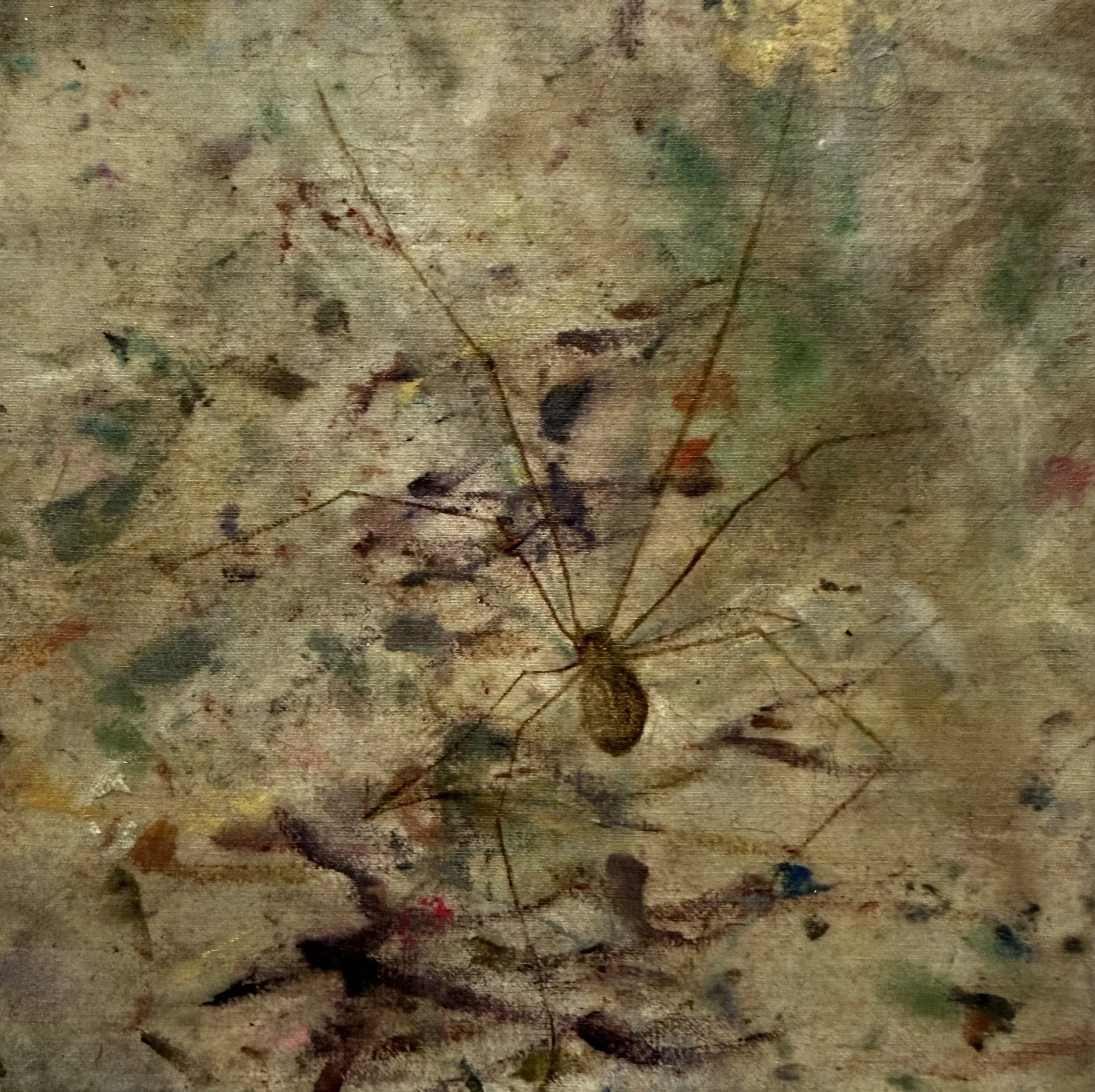
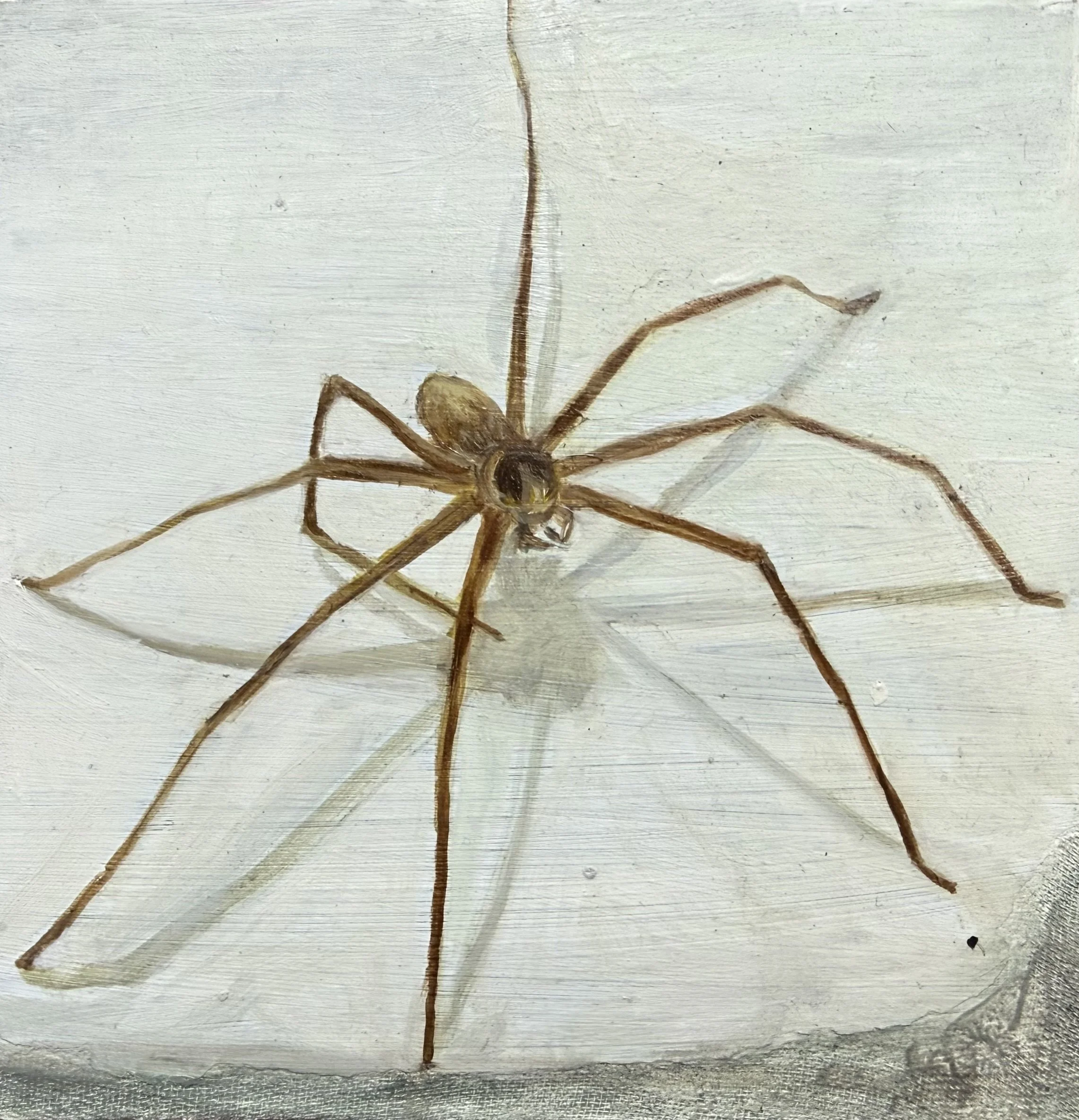
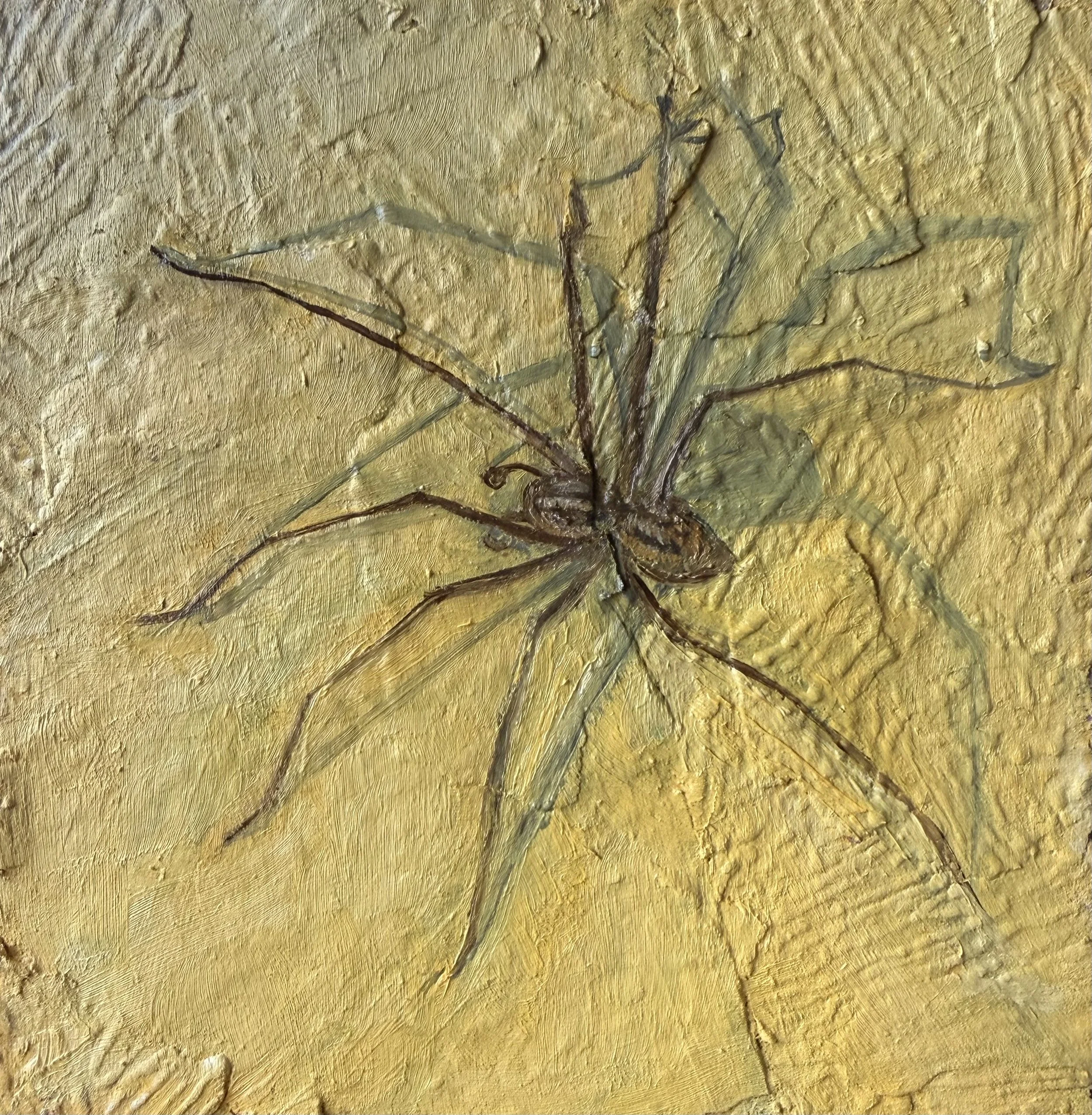
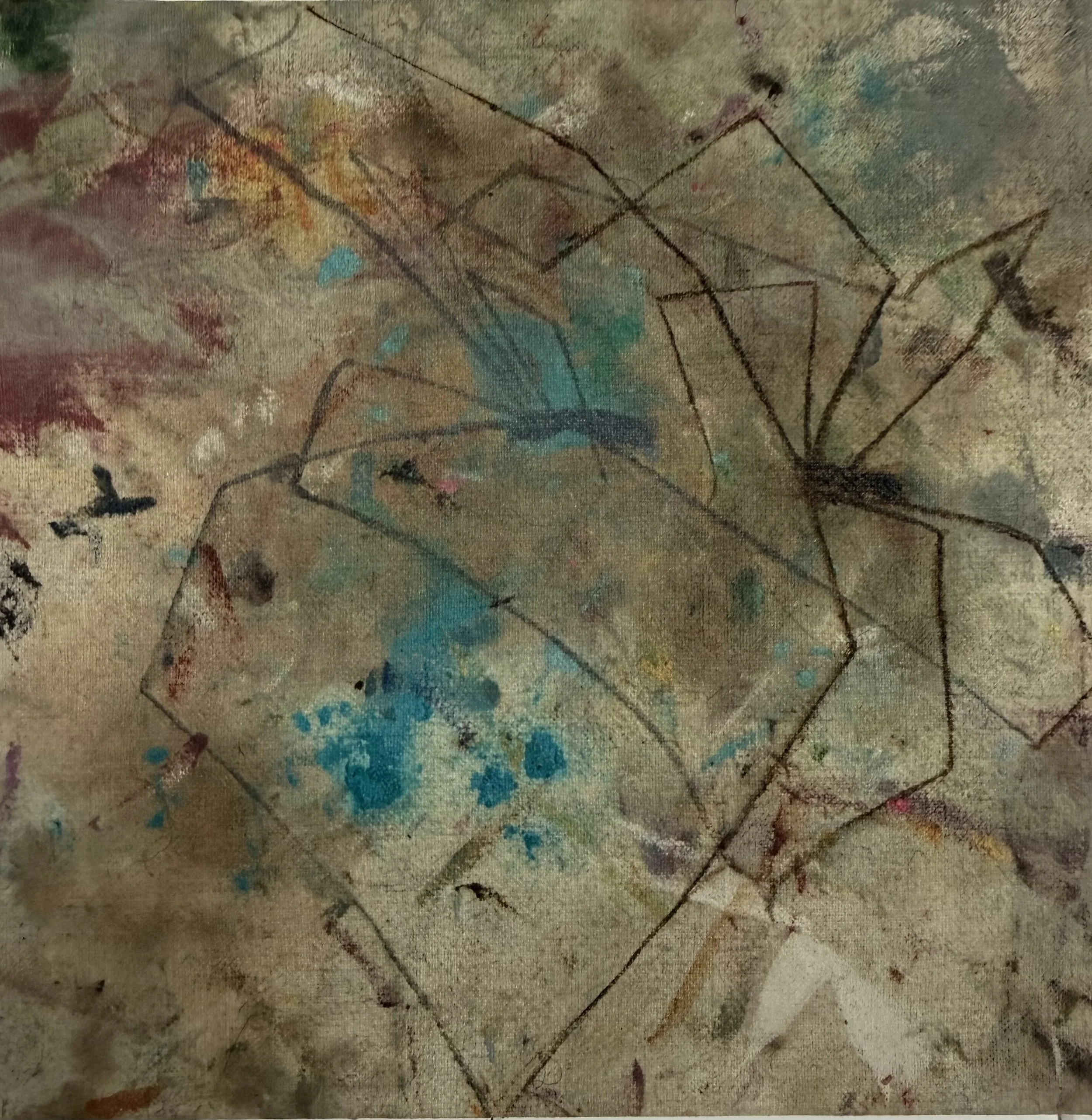
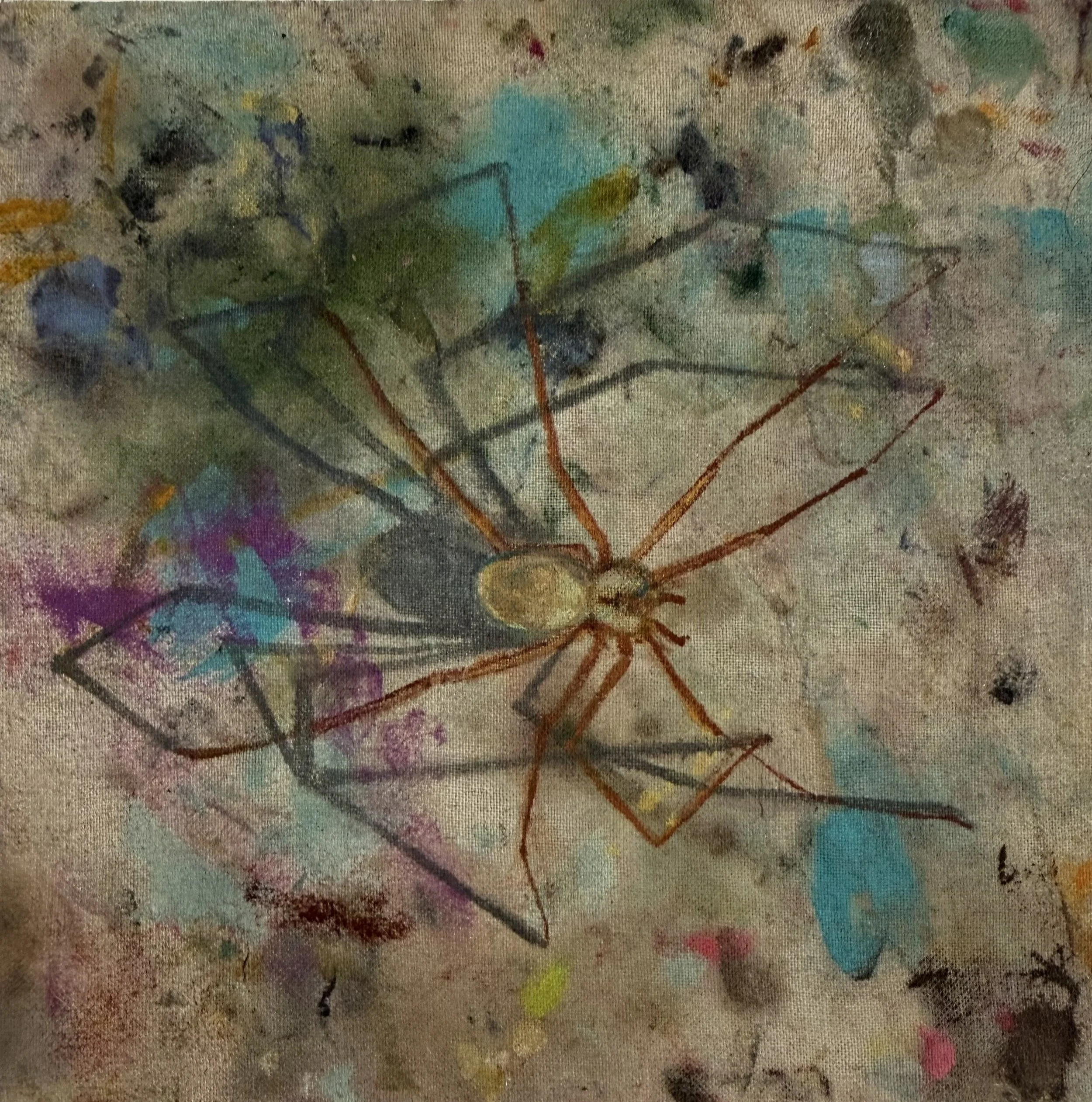
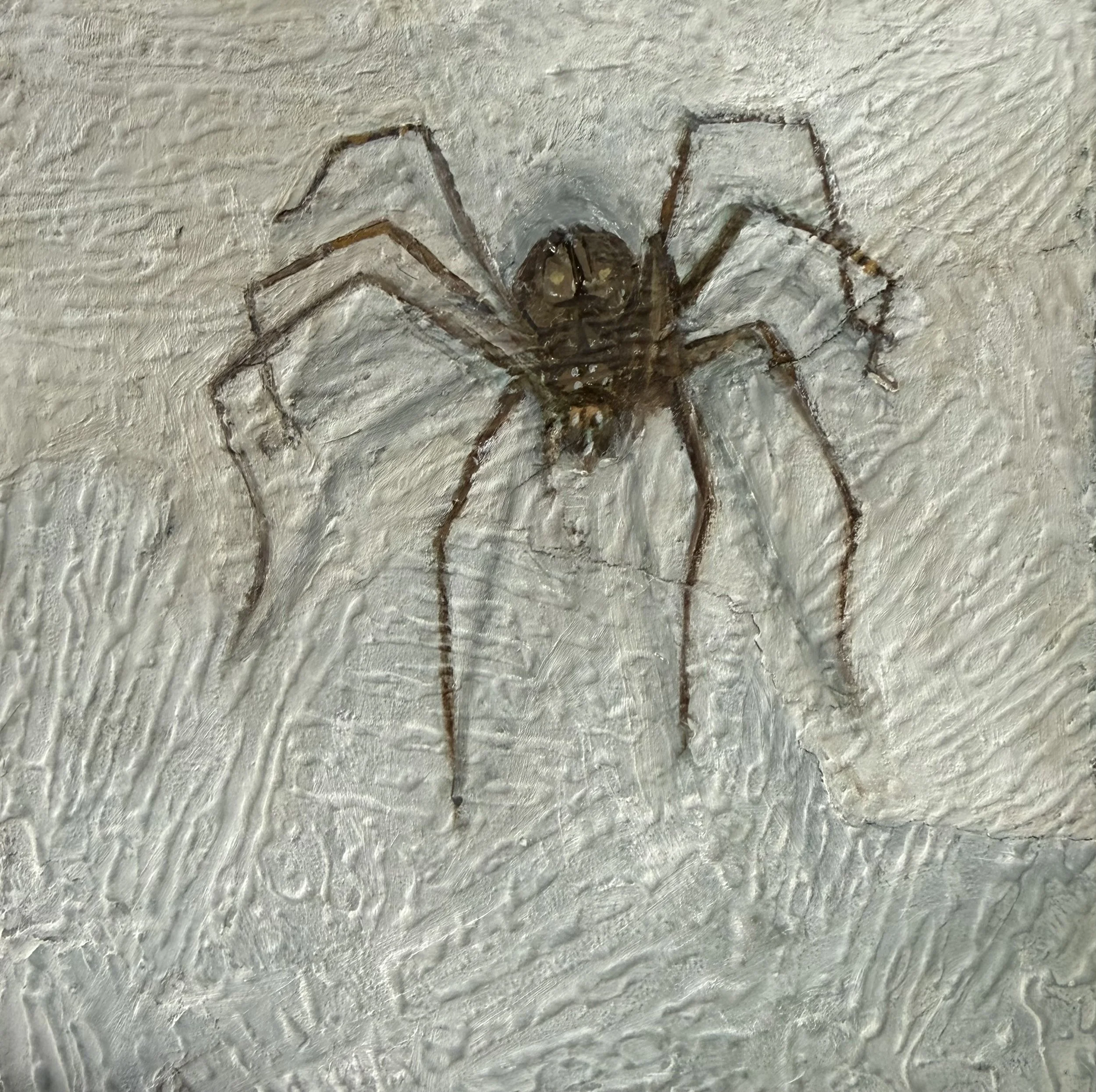
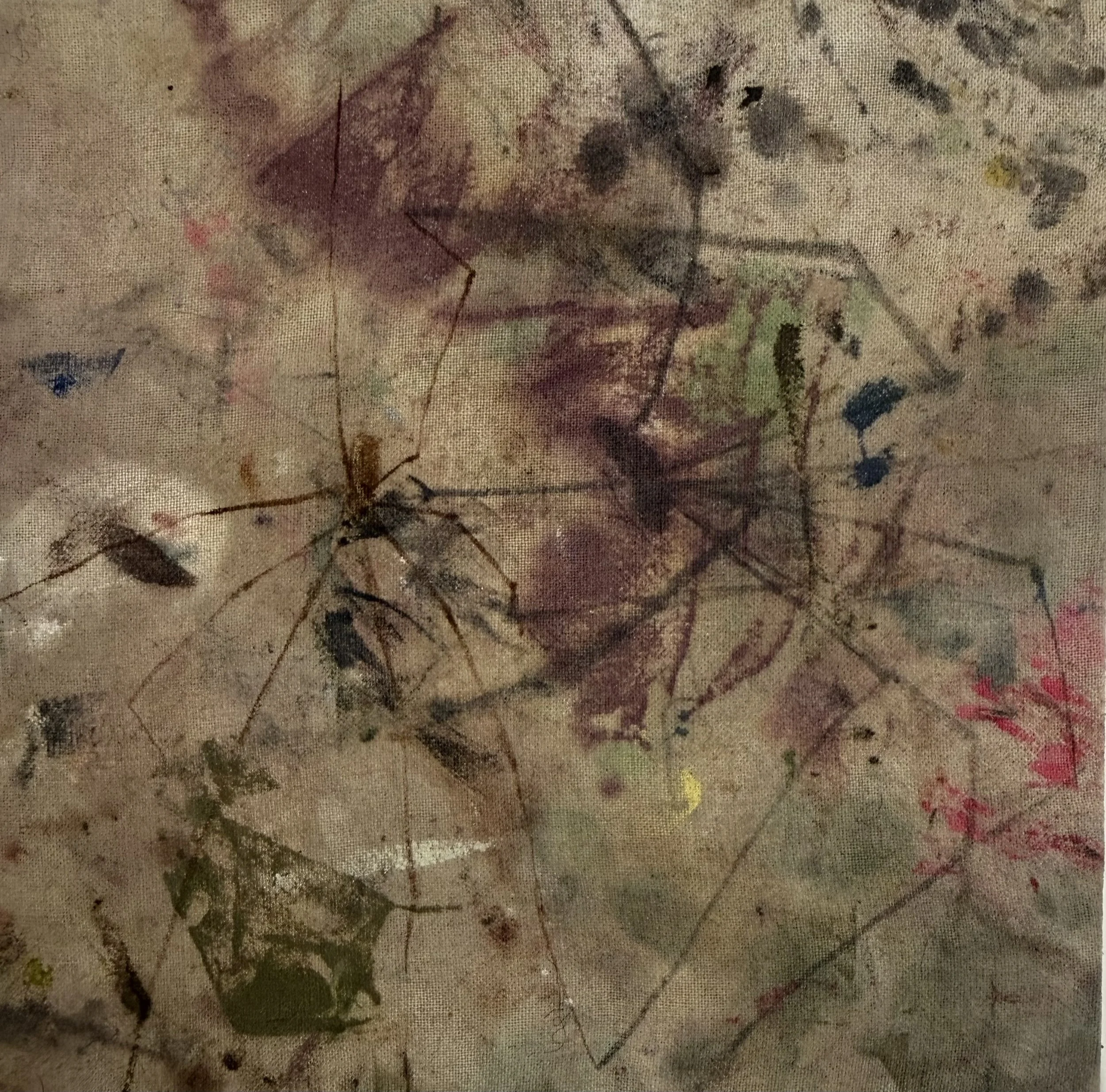
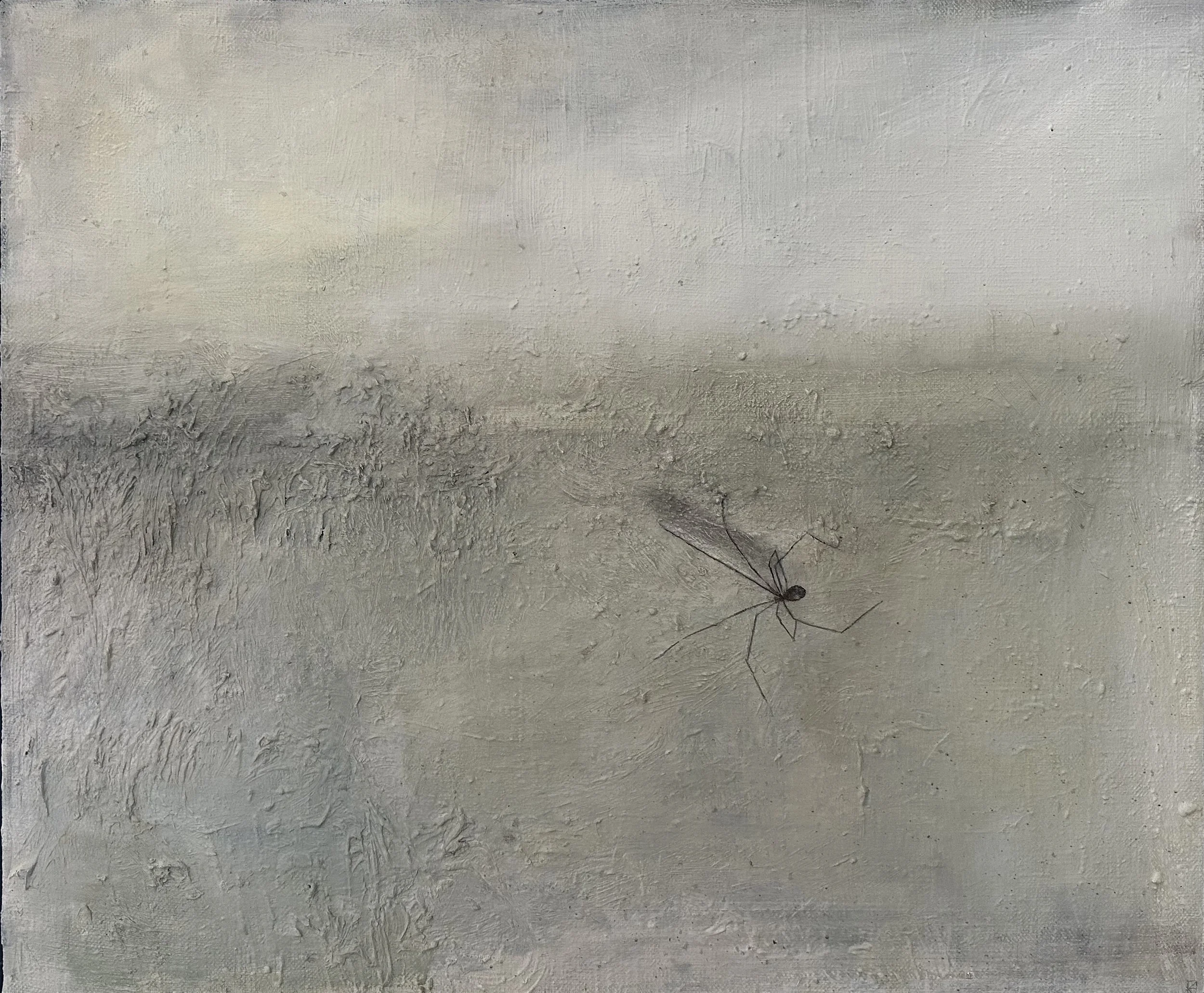
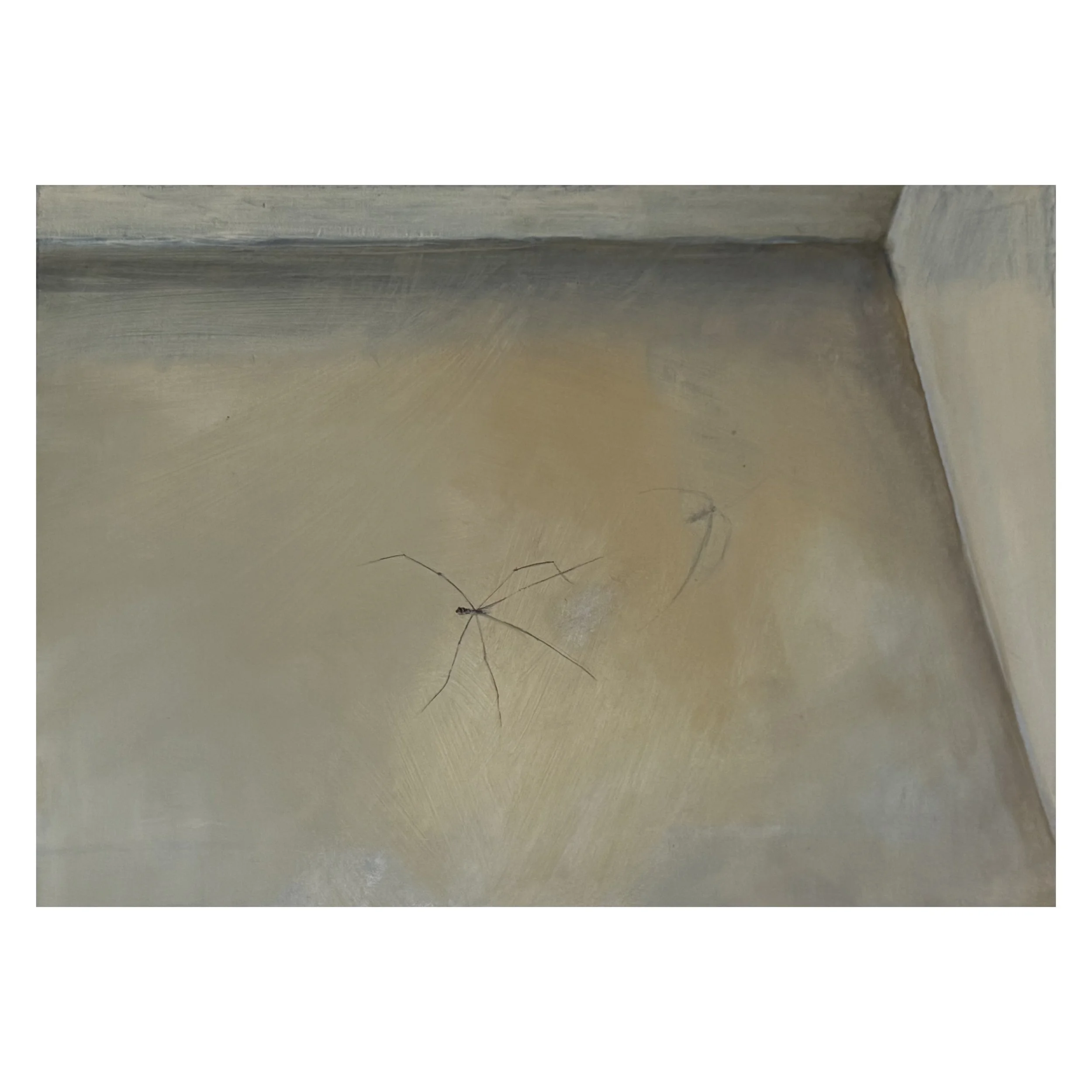
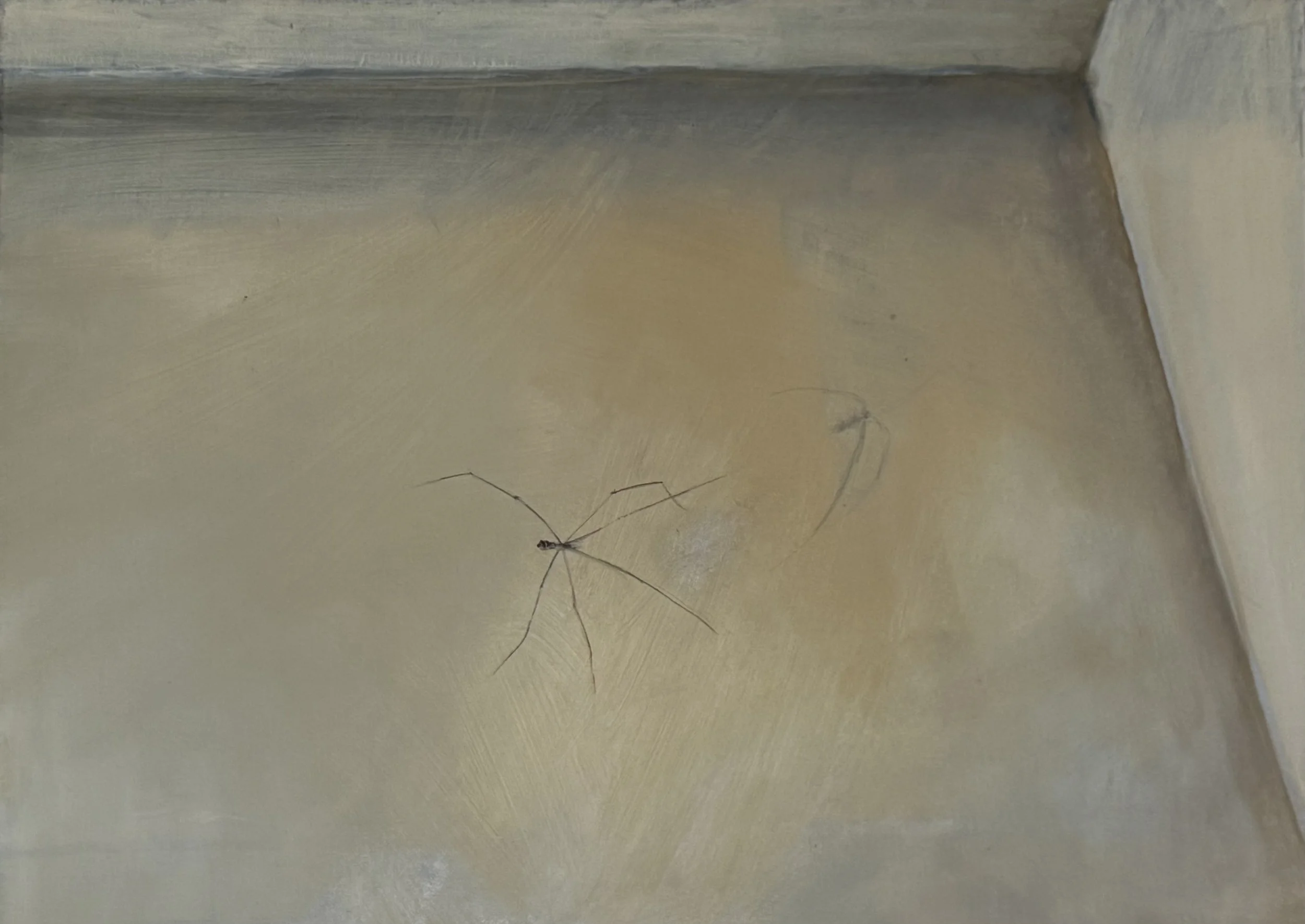
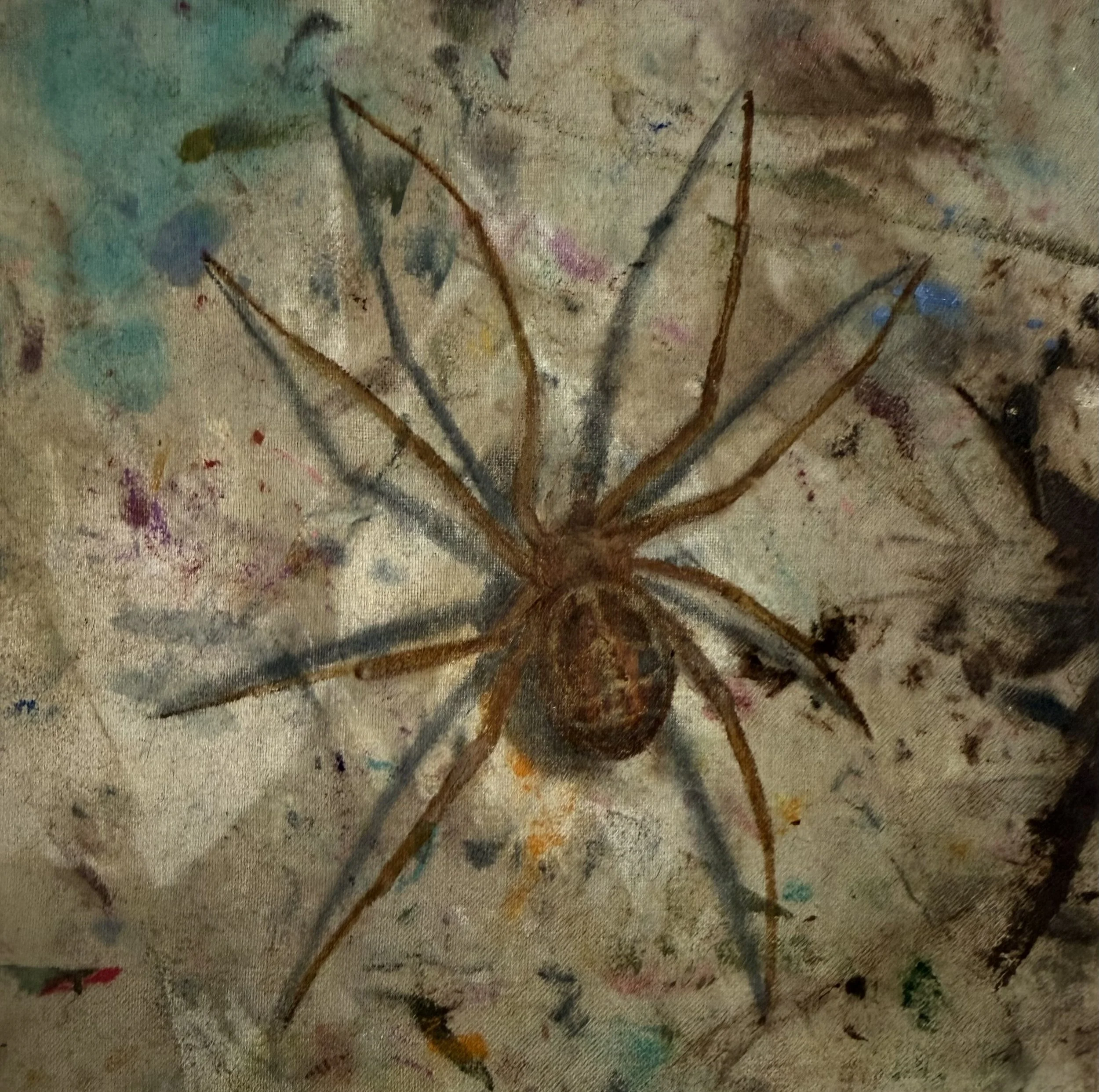
Alongside the flower paintings, the second main focus of this show are spiders painted on rags I used to clean my brushes. - unconscious marks made in the flow state of painting contrast with the conscious rendering of the spiders themselves. The way I paint with oils requires great patience, waiting for layers to dry and sometimes paintings can take years to evolve - hence the rags and their marks are testament to the many hours I spend at my easel and the dedication I have to both my painting and my family.
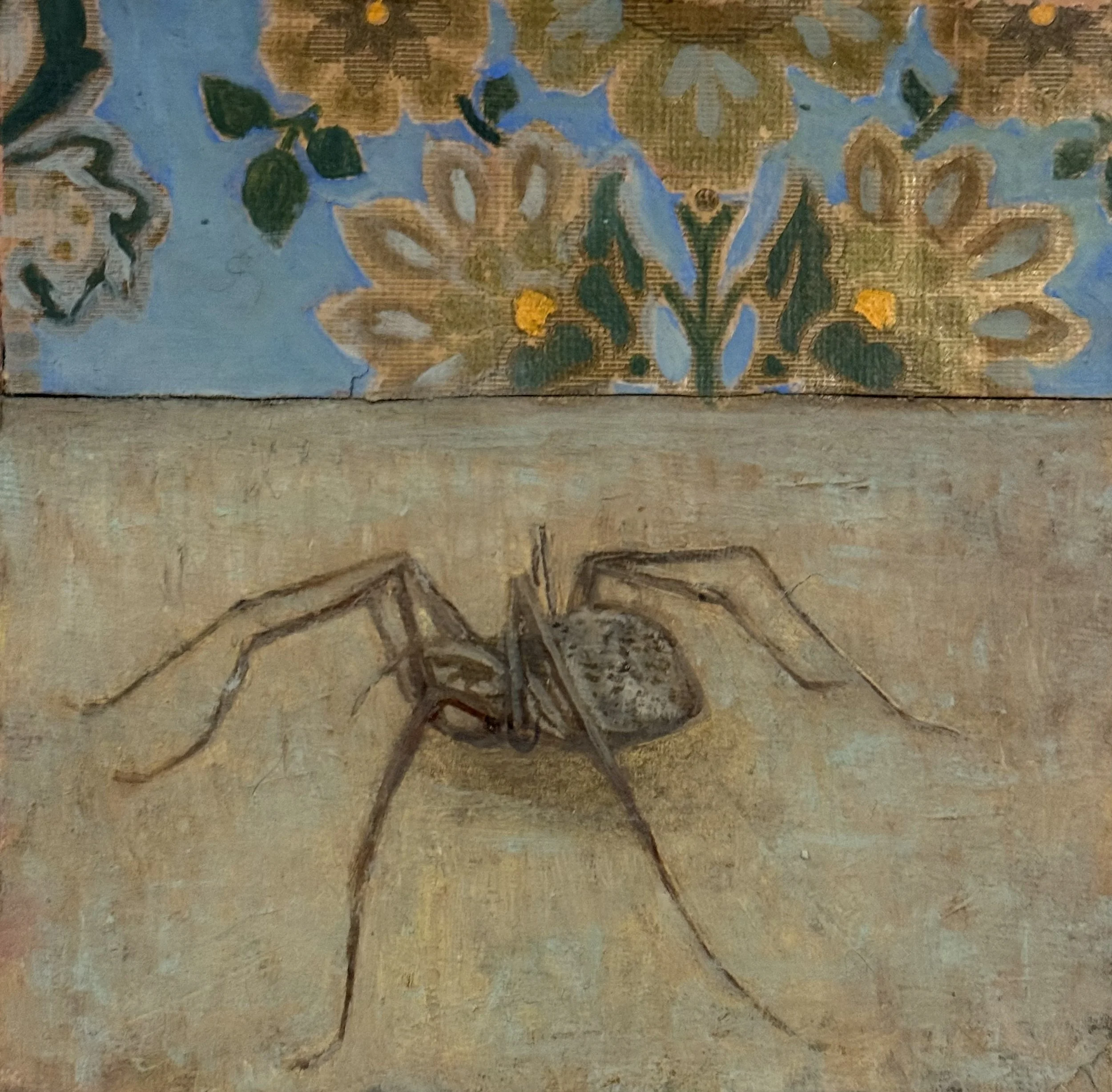
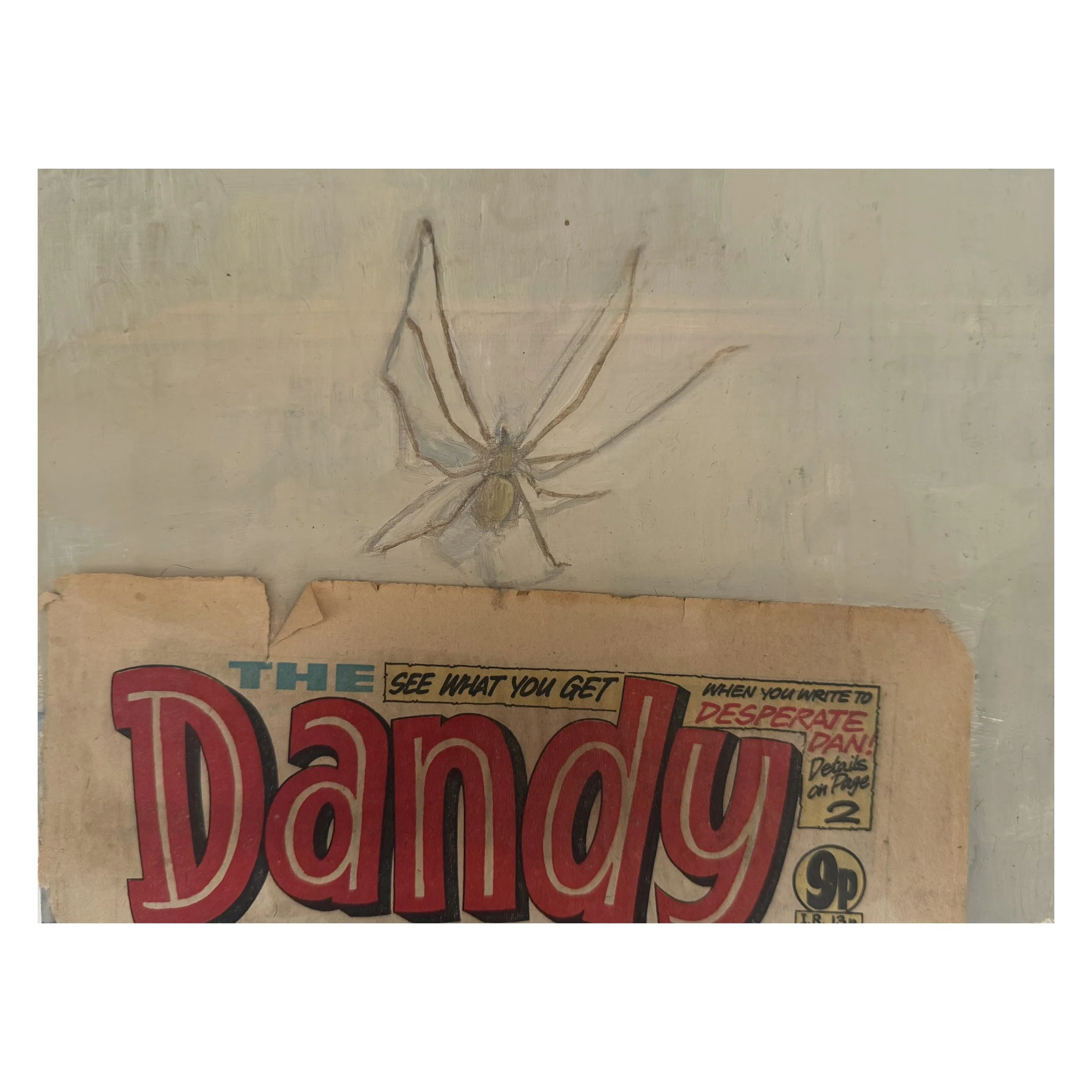
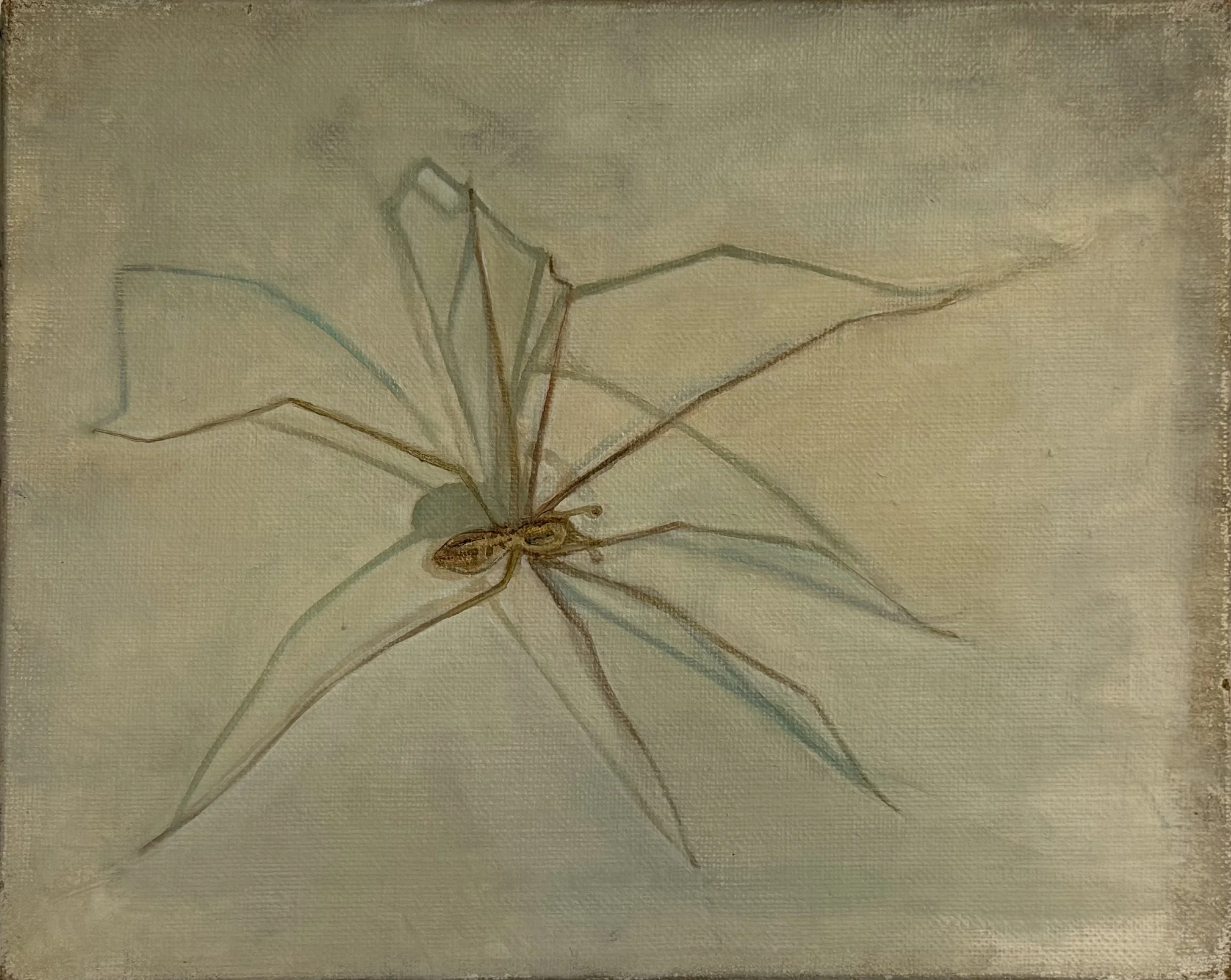
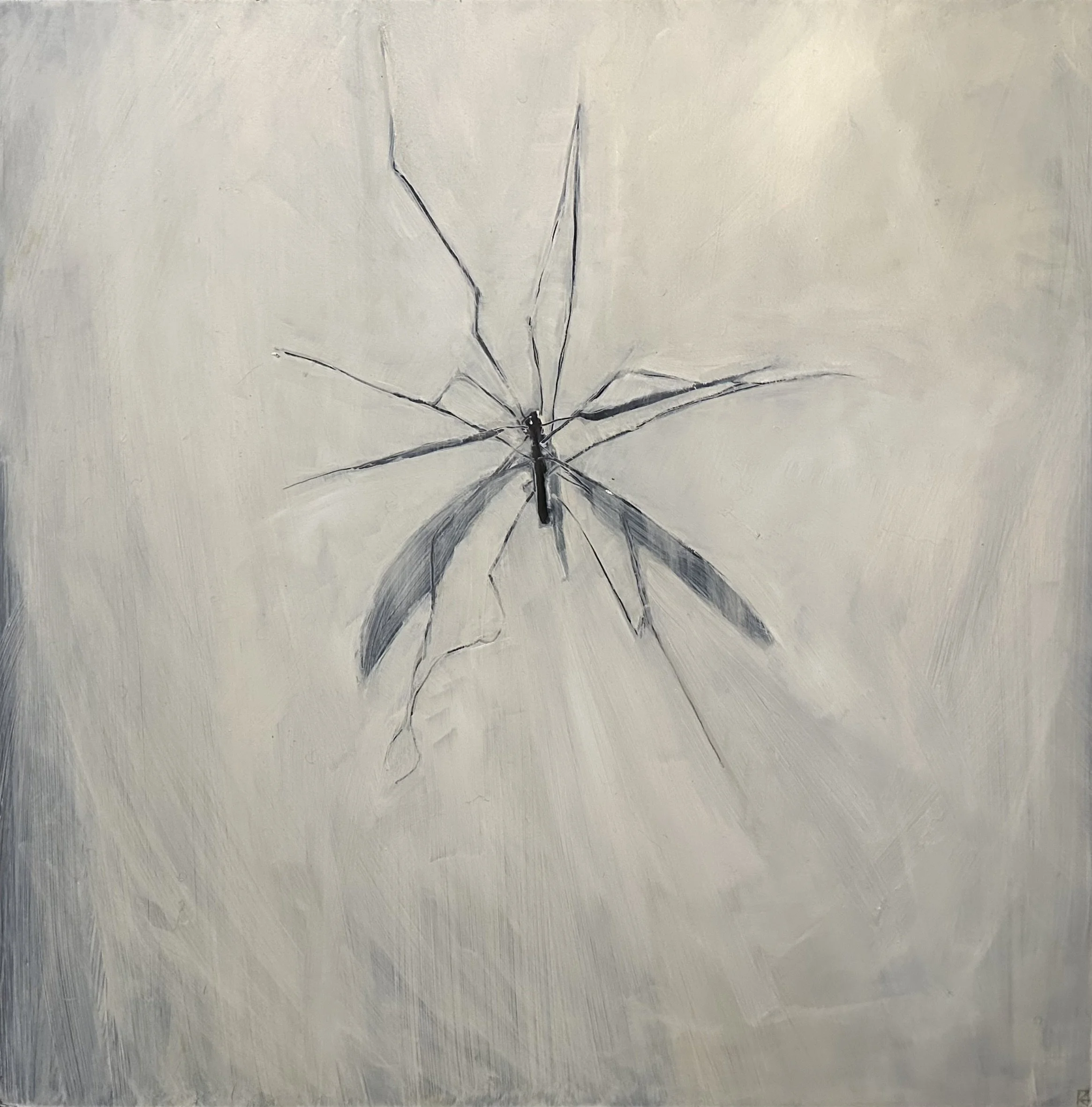
The spider has taken on a special meaning for me over time; linked as they are to ancient creation myths in various different cultures; this somehow relating to the creation of my own home, my own webs, my own lifeworld - a world now being shared with you.
Karen Birkin April 2026






Tomorrow never knows
By Katja Eichinger
I’ve lived with one of Karen’s spider paintings for years now. It’s in my living room, above the fireplace. I believe it’s one of the first ones she painted. Even though I’m quite squeamish about spiders I love looking at it. There’s a profound intrigue and subtle beauty about it that after all this time, still has me mesmerized. Also, I love observing visitors to my apartment to looking at the painting. It never ceases to cause a reaction. Even if they’ve seen it many times before. Some of them go straight to the painting when they enter the room as if they’ve been waiting to confront something that’s been dormant within themselves while they’ve been away.
On the mantlepiece below the painting, there’s a copy of the sphinx that Sigmund Freud had on the desk in his psychoanalytic surgery. I’ve often thought that Karen’s spider and the sphinx are related. Like Oedipus having to confront the sphinx and solve a riddle to continue his path to Thebes, onlookers of the spider painting have to face what Freud called The Uncanny. Something that’s both eerie and familiar, that makes us engage with the finality of life and yet allows us to feel intensely alive.
Spiders like sphinxes are liminal beings. They exist within the in-between. A spider’s web is a beautiful threshold between life and death. They make us experience the passing of time as they weave their webs across a room. Thus, leaving markings of the days, weeks or months that have passed while a space has been devoid of human life. They are reminders of the Moirai, the three Greek goddesses of fate who spin the thread of life, measured it and eventually cut it. Incidentally, the German word for spider is “Spinne.”
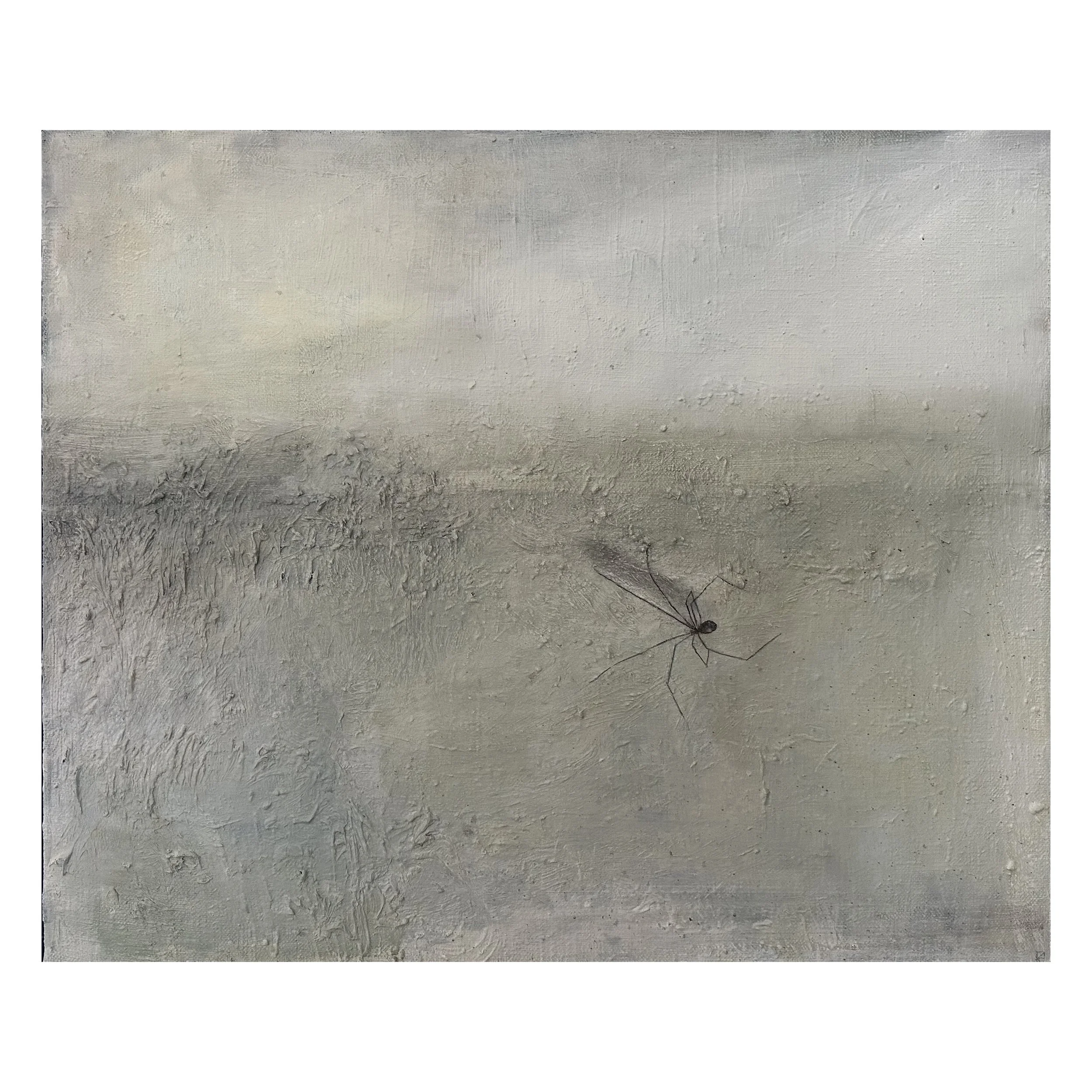
What I love about Karen’s spider paintings is that they mirror paintings of seascapes and the horizon views of her Welsh home. She takes the onlooker from the splendour of the vast to the immensity of the particular. Our gaze becomes the spider’s gaze. Whether tiny or magnificent, the horizon remains the same.
In her new show, Karen pairs the spiders with flowers. Not so much on the peak of their bloom as to give us the illusion of permanence but in various stages of decay. Thus, reminding us of the beauty of impermanence, of not holding on. Of what The Beatles in Tomorrow Never Knows described as “Lay down all thoughts. Surrender to the void.”
Similar to the spiders’ horizons, Karen’s flowers are like miniature landscapes. Thus the flowers as much as the spiders are paintings about time and space and that strange, wonderous experience that takes place within these parameters. Like Freud’s sphinx, Karen gives us riddles about who we are and where we are going and shows us the beauty of not always knowing the answer.